Table Of Contents
As we approach 2026, standing out in a crowded digital marketplace is more challenging than ever. Without establishing brand clarity, businesses risk sending mixed messages, presenting inconsistent visuals, and missing vital opportunities for growth.
A well-crafted brand guide is essential. Recent studies show that brands with strong guidelines outperform competitors by up to 23% in customer loyalty (Lucidpress, 2023). This consistency streamlines decision-making and ensures your brand remains recognisable across every platform.
In this article, you will discover a clear, step-by-step process for establishing brand guidelines, learn what key elements to include, gain practical tips for successful implementation, and explore strategies to future-proof your brand. This comprehensive roadmap will help your business thrive in 2026 and beyond.
Understanding the Role of a Brand Guide
In 2026, establishing brand clarity is more vital than ever. With digital channels multiplying, consumer attention spans shrinking, and competition intensifying, a clear brand guide acts as your North Star. Businesses that invest in establishing brand guidelines benefit from stronger customer recognition and loyalty. As new technologies and societal shifts reshape the market, a robust brand guide provides the foundation for maintaining cohesion, trust, and relevance.

Defining a Brand Guide and Its Core Components
A brand guide is a comprehensive document that captures a brand’s visual and verbal identity. At its core, it outlines how to use your logo, specify your colour palette, define typography, set imagery styles, and articulate your tone of voice and messaging. These elements work together to ensure every piece of communication reflects your brand’s essence.
While people often confuse a style guide with a brand guide, the two serve distinct purposes. A style guide typically focuses on editorial rules, such as grammar and formatting. In contrast, a brand guide covers a broader spectrum, including both visual and verbal standards, and is critical when establishing brand consistency across touchpoints.
Style GuideBrand GuideEditorial rulesVisual and verbal identityGrammar, spellingLogo, colours, tone, messagingLimited to textEncompasses all brand assets
Brand guides have evolved. What once lived in static PDFs now exists as dynamic, digital-first documents. Brands like Airbnb exemplify this shift. Their living brand system updates in real time, allowing teams to adapt assets and messaging on the fly. This flexibility is essential for establishing brand identity that can thrive in fast-moving markets.
Why Brand Consistency Matters More Than Ever
Brand consistency is no longer optional. In an era where consumers interact with brands across countless platforms, maintaining a unified look and voice is crucial. Consistent branding builds trust, enhances recognition, and drives purchase decisions. Recent studies show that companies with consistent branding can see up to a 33% increase in revenue, underlining the financial impact of consistent branding.
Omnichannel marketing has made establishing brand coherence more complex. Every digital and physical interaction, from social media posts to packaging design, must reflect the same values and style. Brands that fail to align these touchpoints risk confusing customers and diluting their message. For instance, when a global retailer rolled out mismatched visuals across markets, customer trust and sales both declined.
Building a lasting connection requires more than just a memorable logo. It demands a disciplined, ongoing approach to establishing brand standards that everyone in your organisation can follow. This is how you ensure every interaction reinforces your identity and value proposition.
Navigating Branding Trends and Consumer Expectations in 2026
As we look to 2026, establishing brand relevance means keeping pace with evolving trends. Consumers now demand authenticity, inclusivity, and sustainability from the brands they support. They expect messaging that feels genuine and visuals that reflect diverse perspectives.
The rise of AI-generated content makes it even more important to have clear brand guidelines. Without them, your brand’s human touch risks being lost amid automated messaging. Leading brands are already adapting their guides for emerging platforms like AR, VR, and voice search, ensuring their identity remains strong wherever customers engage.
Accessibility is another cornerstone. Modern consumers expect brands to be usable by everyone, regardless of ability or location. Companies like Microsoft have set benchmarks by embedding inclusive design principles directly into their brand guidelines. Globalisation adds another layer, requiring brands to adapt core assets for regional preferences while maintaining a unified identity.
In summary, establishing brand guidelines that address these trends is essential for future growth. It positions your business to respond confidently to change, innovate responsibly, and build meaningful relationships with customers worldwide.
Step 1: Laying the Foundation—Brand Discovery and Strategy
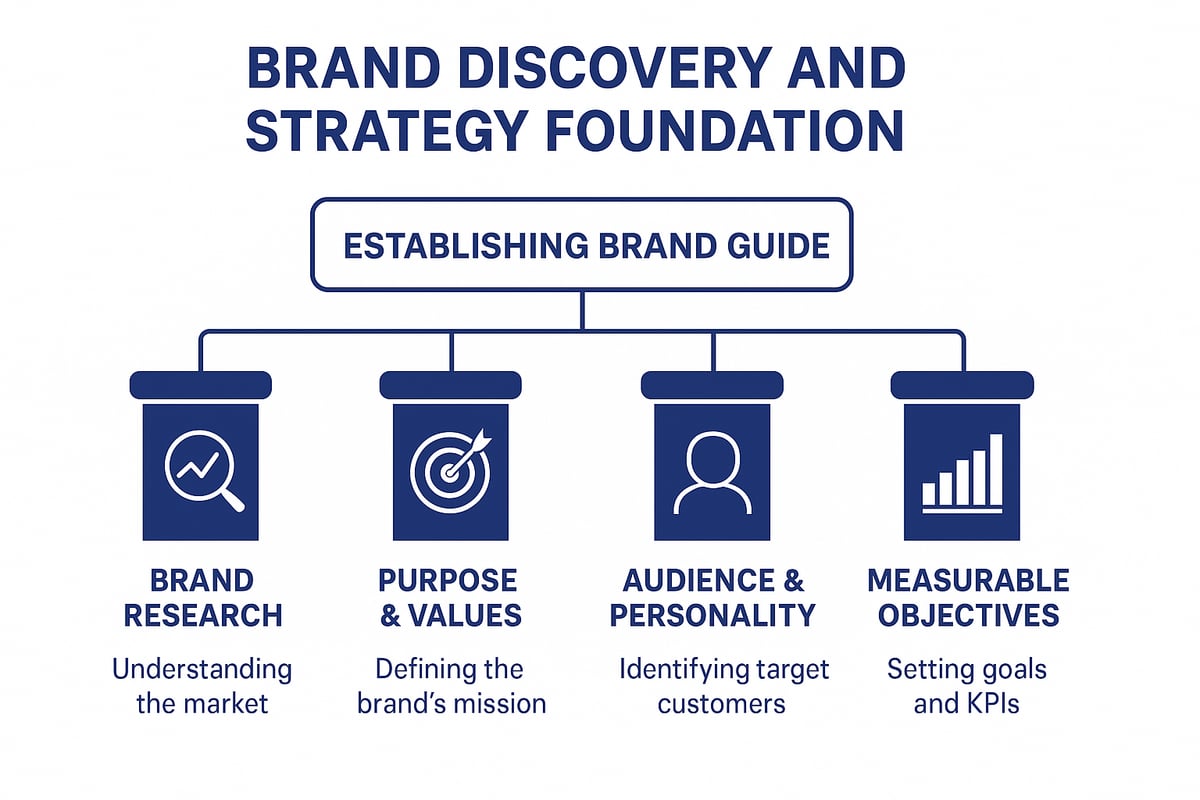
Building a powerful brand starts with a deep understanding of who you are, what you stand for, and whom you serve. Establishing brand foundations requires a dedicated, structured approach that ensures every subsequent decision is both strategic and consistent. In this section, we break down the essential steps to position your brand for long-term success.
Conducting In-Depth Brand Research
The first step in establishing brand clarity is a thorough audit of your current assets. Review every logo, colour, typeface, and message in market use. Look for inconsistencies that might confuse your audience or dilute your presence.
Next, perform a competitor analysis. Identify direct and indirect competitors, examining their strengths, weaknesses, and unique selling propositions. This process helps you highlight what differentiates your own offering.
Engage with your customers through surveys and interviews. Gather insights about their perceptions, values, and expectations. For instance, Nike’s approach to establishing brand leadership relies heavily on listening to consumer feedback and translating it into strategic direction.
A useful resource for actionable steps in this phase is How to create a unique brand, which provides further guidance on building distinctive foundations.
Defining Brand Purpose, Vision, and Values
After research, the next priority in establishing brand direction is to articulate your purpose, vision, and values. Your purpose statement should answer why your business exists beyond profit. A compelling vision outlines where you aim to be, while core values guide every decision and behaviour.
Aligning these elements with your long-term goals ensures your team is united. Research shows that purpose-driven branding is a key driver of loyalty. In fact, 89% of shoppers say they stay loyal to brands that share their values (Accenture, 2023).
When establishing brand values, be specific and authentic. Avoid generic statements. Instead, focus on what truly sets your business apart and resonates with your audience.
Establishing Target Audience and Brand Personality
A critical part of establishing brand identity is understanding your target audience. Develop detailed buyer personas that capture demographic, psychographic, and behavioural traits. This ensures your messaging speaks directly to those who matter most.
Select a brand archetype that aligns with your market and aspirations. For example, Apple’s innovative and creative personality has set it apart for decades, helping establish a devoted customer base.
Emotional connection is a cornerstone of successful branding. When your audience feels understood and valued, loyalty follows. By establishing brand personality traits that reflect your audience’s desires, you create a bond that goes beyond the transaction.
Persona ElementDescriptionDemographicsAge, gender, locationPsychographicsInterests, valuesBehavioural TraitsBuying habits, needs
Setting Measurable Brand Objectives
Finally, tie your strategy to measurable outcomes. Establishing brand objectives should be guided by clear KPIs that track awareness, engagement, sentiment, and conversion.
Leverage analytics tools to monitor progress. For example, Coca-Cola’s global brand health tracking system enables them to assess performance across markets and make data-driven adjustments.
Key KPIs for establishing brand success include:
By consistently reviewing these metrics, you ensure that your brand development efforts remain aligned with business goals and market realities.
Step 2: Crafting the Visual and Verbal Identity
Establishing brand success in 2026 relies on a unified visual and verbal identity. This step shapes how your audience perceives and remembers your business. A strong identity builds recognition, trust, and loyalty, providing a foundation for consistent growth. By focusing on both visual design and messaging, you ensure that every interaction aligns with your values and goals.

Designing Visual Elements: Logo, Colours, Typography, and Imagery
The visual identity is the face of your brand. Begin by establishing brand visuals that reflect your values and resonate with your audience. A well-designed logo should be versatile, memorable, and scalable across digital and print. Define a colour palette that communicates your brand’s personality—blue signals trust, green suggests eco-friendliness.
Typography choices affect readability and tone. Choose fonts that align with your identity, ensuring hierarchy and clarity. Imagery style, whether photography, illustrations, or iconography, should be consistent and support your narrative.
For example, Spotify’s use of vibrant green and bold typography ensures instant recognition everywhere. Consistency in these elements is crucial, as research shows that brand consistency as a revenue driver in 2025 delivers measurable financial benefits. By establishing brand visuals with clear guidelines, you set the stage for cohesive communication.
Developing a Distinct Brand Voice and Messaging
Your brand’s voice is how you speak to your audience. When establishing brand messaging, define a tone that fits your market—formal or informal, playful or authoritative. Craft key messages and taglines that capture your purpose and values.
Develop copywriting guidelines for different platforms, from websites to social media. This ensures every post, email, and ad sounds unmistakably yours. Mailchimp is a prime example, using a witty, approachable voice that builds rapport and stands out in a crowded inbox.
A distinct voice fosters emotional connection and trust, making your brand more relatable. As you focus on establishing brand identity, remember that consistent messaging is as powerful as consistent visuals.
Ensuring Accessibility and Inclusivity in Brand Assets
Modern audiences expect brands to be inclusive and accessible. When establishing brand assets, integrate accessibility standards such as WCAG to make content usable for everyone. Use high-contrast colours, readable fonts, and descriptive alt text for images.
Design for diversity by considering multicultural markets and varying needs. Microsoft’s inclusive design principles set a benchmark—designing for one, extending to many. By embedding inclusivity from the start, you broaden your reach and strengthen community trust.
Prioritising accessibility is not just ethical, it’s strategic. Establishing brand assets that welcome all users positions your business for long-term relevance and growth.
Documenting Usage Guidelines for Stakeholders
Clear guidelines ensure that everyone applies your brand assets correctly. Document rules for logo placement, colour usage, typography, and messaging. Use real-world do’s and don’ts, supported by visual examples, to clarify expectations.
Interactive, digital brand guides offer flexibility and ease of access compared to static PDFs. They enable real-time updates, making it easier for teams and partners to stay aligned. By establishing brand guidelines that are practical and accessible, you empower your organisation to maintain consistency at every touchpoint.
Effective documentation is the bridge between strategy and execution, safeguarding your brand’s integrity as you grow.
Step 3: Implementing and Activating Your Brand Guide
Launching your establishing brand guide is a pivotal phase that brings your strategy to life. Implementation ensures every team member understands and champions your brand identity. With a clear plan, you can turn guidelines into tangible results, building consistency at every touchpoint.
Rolling Out the Brand Guide Across the Organisation
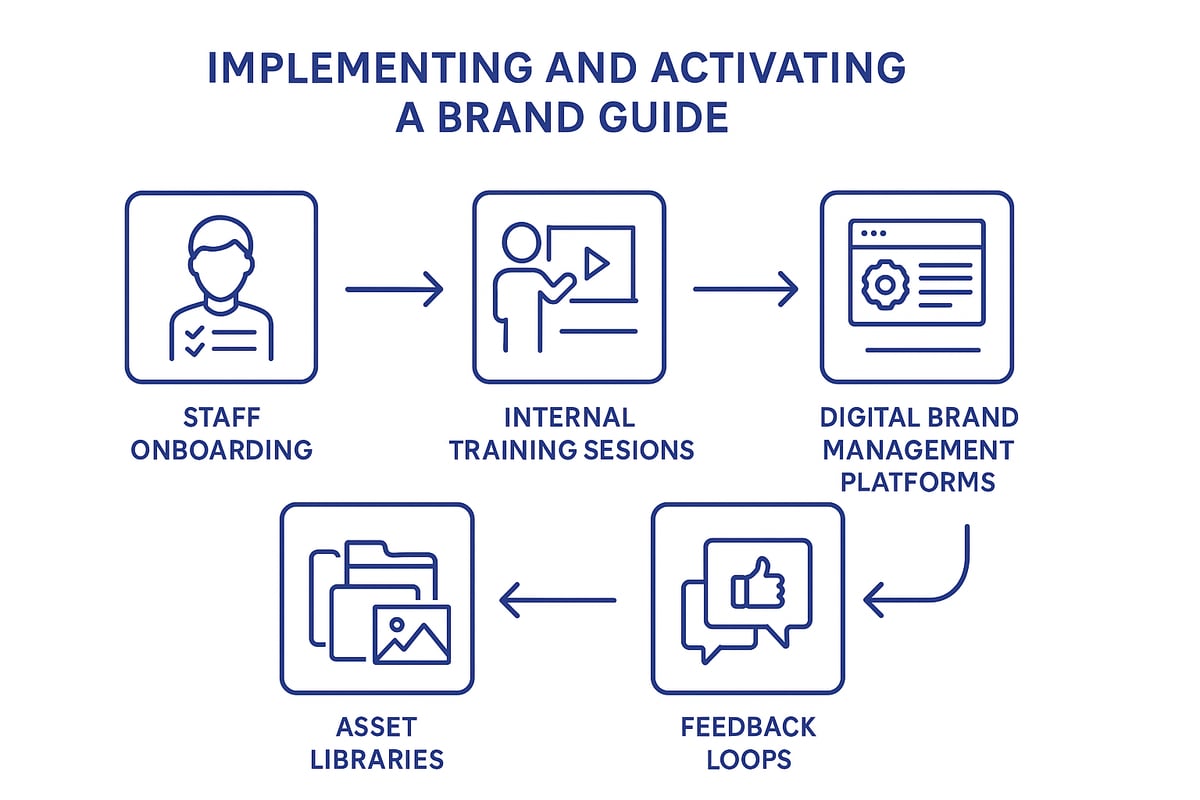
Rolling out an establishing brand guide starts with strong internal communication. Begin by announcing the new guidelines to all staff and stakeholders. Use interactive onboarding, such as workshops and Q&A sessions, to explain why the brand guide matters and how it supports daily work.
A successful rollout includes:
Google’s internal brand training programs are a great example. They use hands-on workshops and real-life case studies to help teams absorb the establishing brand principles. This approach builds ownership and enthusiasm, ensuring everyone is on the same page from day one.
Integrating the Brand Guide into Marketing and Operations
After onboarding, the next step is embedding the establishing brand guide into every aspect of your operations. Align all marketing collateral, from websites to packaging, using approved templates and style elements.
Create a central asset library where teams can access logos, colours, and approved images. This resource saves time and reduces errors. Consistent use of the brand guide across digital and physical touchpoints builds trust and recognition.
For example, updating social media profiles, email signatures, and signage ensures unified messaging. Regular audits of marketing materials help catch inconsistencies early, maintaining the integrity of your establishing brand.
Leveraging Technology and Tools for Brand Governance
Technology is essential for maintaining a strong establishing brand. Digital brand management platforms, such as Frontify or Bynder, provide a single source for guidelines and assets. These tools automate approval workflows, making it easier to distribute updates and control usage globally.
Unilever’s approach stands out, using digital solutions to manage brand assets across diverse markets. Automation ensures teams worldwide follow the same standards, improving efficiency and reducing risk.
Maintaining brand consistency also delivers measurable business benefits. According to Brand consistency boosts revenue by 23%, companies with unified branding see significant revenue growth. Investing in these tools helps your organisation stay agile and competitive.
Monitoring Compliance and Gathering Feedback
Ongoing success with your establishing brand guide depends on monitoring and adaptation. Set up regular brand audits to review compliance across all channels. Use feedback forms and team surveys to capture insights on what works and where improvements are needed.
Encourage staff to report issues or share ideas for refining the guide. Adjust your guidelines as your business grows or as market trends evolve. This agile approach ensures your brand remains relevant and resilient.
For further reading and support on maintaining brand standards, explore the latest branding category resources. By fostering a culture of feedback and continuous improvement, you can future-proof your establishing brand and drive long-term success.
Step 4: Future-Proofing Your Brand Guide for 2026 and Beyond
As we approach a new era of digital transformation, establishing brand guidelines that can adapt and thrive is essential. The landscape will continue to evolve rapidly, making it crucial for businesses to build flexibility and resilience into their brand frameworks from the outset.
Adapting to Emerging Technologies and Platforms
The digital environment is expanding beyond traditional screens. To ensure your establishing brand efforts remain effective, prepare assets for AI assistants, AR/VR experiences, and voice search. Modern brand guides should provide modular rules, allowing easy updates as new platforms arise. For example, some brands are already testing AI avatars and digital twins as part of their customer engagement strategies.
A strong, adaptable brand guide helps maintain consistency across these technologies. According to Brand consistency's impact on revenue growth, brands with unified identities across channels see measurable gains in customer loyalty and revenue. This makes future-proofing a non-negotiable part of establishing brand success.
Embracing Sustainability and Social Responsibility
Consumers in 2026 expect brands to stand for more than just products. Embedding sustainability and ethical practices into your establishing brand guidelines is now a baseline requirement. This could include setting standards for environmentally friendly materials, clear messaging about ethical sourcing, and transparency in community involvement.
A sustainable approach to establishing brand not only builds trust but also aligns with the 64% of consumers who prefer brands that share their values. Documenting these principles within your brand guide ensures that every team member communicates your commitment authentically across all touchpoints.
Building Flexibility for Global and Local Market Needs
Establishing brand value on a global scale means balancing consistency with local relevance. Effective brand guides provide frameworks for customising content and visuals to suit regional markets, while maintaining a coherent identity. This includes guidelines for language, imagery, and even legal compliance in different countries.
For example, multinational brands often tailor campaigns for local cultures, as seen in the food and real estate sectors. You can explore more about these adaptation strategies in Branding in real estate insights. This approach ensures your establishing brand remains both recognisable and relatable worldwide.
Maintaining a Living Brand Guide
Gone are the days of static PDF manuals. In 2026, the most effective approach to establishing brand is through a living, cloud-based brand guide. This allows for real-time updates, easy collaboration, and immediate access for both internal and external stakeholders.
Encourage teams to contribute feedback and suggest improvements. A living document ensures that your establishing brand guidelines can evolve alongside your business, keeping your messaging and visuals relevant as trends and technologies shift.
Measuring Long-Term Brand Success
To validate your establishing brand efforts, set clear, long-term KPIs. These could include brand equity scores, customer advocacy rates, and reputation metrics. Use analytics platforms, such as Brandwatch or YouGov, to track and interpret data regularly.
A simple table can help summarise key metrics:
MetricDescriptionTool ExampleBrand Awareness% of target audience reachedBrandwatchSentimentPositive/negative mentionsYouGovAdvocacyNPS, referralsInternal CRM
Regular measurement ensures your establishing brand remains on track for sustained growth.
Case Studies: Brands Leading the Way in 2026
Several brands stand out for future-ready approaches to establishing brand. For instance, global tech firms have integrated modular design systems to seamlessly support new platforms. Consumer goods companies have built flexible templates for regional launches, while lifestyle brands prioritise sustainability and inclusivity in every guideline update.
What sets these leaders apart is their commitment to ongoing innovation, adaptability, and authentic engagement. By following their example, you can ensure your establishing brand is positioned for success in the years to come.
As we’ve explored, building a clear brand guide isn’t just about having a set of rules—it’s your foundation for standing out, building trust, and staying ahead as the digital landscape evolves. If you’re ready to put these strategies into action but want expert guidance to streamline the process, I’m here to help. With over a decade of experience in brand strategy and digital design, I can work alongside you to create a brand identity and guide that truly supports your business growth in 2026 and beyond.
Start your project