Table Of Contents
Ever wondered why certain brands stick in your memory while others slip away unnoticed? From the apps on your phone to the signs on the street, graphic design is what quietly shapes your daily experiences and decisions.
Graphic design is what transforms ideas into visual communication that informs, persuades, and inspires. It is not just about making things look appealing, it is about crafting clarity and delivering messages that resonate.
In this guide, you will discover what makes graphic design such a powerful force in 2026. We will break down the fundamentals, explore the core elements and principles, review the main types of design, and walk through the creative process. You will also learn about digital transformation and future trends shaping the industry.
Graphic design is the invisible engine behind memorable branding, seamless user journeys, and compelling storytelling. Ready to unlock the secrets of visual communication and see how you can use design for real impact? Read on.
Understanding Graphic Design: Definition, Purpose & Impact
Graphic design is what shapes our daily experiences, whether we notice it or not. From the signs we follow in public spaces to the apps we use on our phones, graphic design guides our perceptions and decisions. But what exactly does this creative discipline involve? Let us break down the essentials, from its definition and role to its future impact and common misconceptions.

What Is Graphic Design?
At its core, graphic design is what enables us to communicate visually. It is the craft of creating visual content that conveys messages with both clarity and aesthetic appeal. Designers use a toolkit of typography, imagery, colour, and layout to shape how information is received.
The roots of graphic design stretch from ancient cave paintings to modern digital media. Unlike pure art, design is about solving communication problems. For example, if a poster about lost registration details is unclear, graphic design can rework the layout to make the information easy to find.
Graphic design is a professional field, with average salaries ranging from $43,000 to $66,000 per year (industry data). For a deeper dive into the discipline, see What is graphic design.
The Role of Graphic Design in Communication
Graphic design is what transforms ideas into compelling stories. It does more than decorate—it guides attention, simplifies complex concepts, and stirs emotion. Think of branding, advertising, and user interfaces; each relies on design to capture interest and ensure information is accessible.
A human-centred approach is key. Designers put the user's needs first, making sure the message is clear and easy to understand. Good design is what increases trust and usability, helping brands connect with audiences on a deeper level.
Why Graphic Design Matters in 2026
In a digital-first world, graphic design is what gives organisations a competitive edge. The demand for skilled designers is rising as businesses compete for attention across digital platforms. Effective visual communication drives engagement, boosts conversions, and builds brand loyalty.
Consider a university class that filled up after a poster was redesigned for clarity and appeal. This is a real-world example of design directly impacting business results. In 2026, design is what sets thriving brands apart from the rest.
Common Misconceptions About Graphic Design
Many people still believe graphic design is what makes things look pretty, but it is much more strategic. There is often confusion between graphic design, visual design, and UX design. For instance, graphic design focuses on messaging, while visual design is more about product aesthetics and UX design centres on user experience.
A quick comparison:
| Discipline | Main Focus |
|---|---|
| Graphic Design | Communication |
| Visual Design | Product Look |
| UX Design | User Experience |
Both graphic and visual design are essential for a cohesive brand experience. Understanding these differences helps clarify what each discipline brings to the table.
Core Elements & Principles of Graphic Design
Graphic design is what brings clarity, order, and impact to visual communication. Understanding its elements and principles is essential for crafting designs that not only look good but also connect with audiences. Let’s break down the fundamentals every designer needs to master.

Essential Elements of Graphic Design
At its core, graphic design is what transforms ideas into visual experiences. The essential elements include:
- Colour: Sets mood, creates contrast, and signals meaning.
- Typography: Shapes readability and personality.
- Line: Guides the eye and separates content.
- Shape: Organises, contains, and decorates.
- Texture: Adds depth and tactile illusion.
- Space: Offers breathing room and focus.
- Balance: Achieves stability and harmony.
- Harmony: Unifies different parts into a cohesive whole.
When these elements are combined thoughtfully, they create visual hierarchy and interest. For example, strategic use of negative space can make a headline pop while guiding the viewer’s eye. According to Figma, these eight essentials form the backbone of design.
Fundamental Principles: Balance, Contrast & Hierarchy
Graphic design is what ensures information is not just presented, but also understood. The key principles include:
- Balance: Symmetrical or asymmetrical distribution of elements.
- Contrast: Differentiates and draws attention.
- Emphasis: Highlights the most important information.
- Movement: Leads the viewer’s eye through the layout.
- Rhythm: Creates flow and consistency.
- Unity: Brings together disparate elements.
- Proportion: Maintains visual harmony.
A strong visual hierarchy helps viewers process content efficiently. Techniques like the Golden Ratio and Rule of Thirds are often used to achieve pleasing layouts. For a deeper dive into hierarchy, explore Visual hierarchy in design. Applying these principles ensures your designs are both attractive and user-friendly.
Colour Theory & Emotional Impact
Colour is a powerful tool in shaping perception—graphic design is what makes colour work strategically. Colour theory explains how combinations influence mood and behaviour. For instance, blue is often chosen for banking brands to signal trust, while red is used for alerts to grab attention. Green typically suggests growth or approval.
Cultural context matters too: white symbolises purity in some cultures and mourning in others. Data shows colour boosts brand recognition by up to 80 percent, making it a critical element in design decisions. Thoughtful colour choices set the emotional tone and reinforce brand identity.
Typography: More Than Just Fonts
Typography is much more than selecting a font—graphic design is what turns type into a storytelling device. The right typography improves readability, sets the mood, and shapes brand perception. Font pairing, scale, and hierarchy guide users through content logically.
For example, sans-serif fonts give a modern, energetic feel, while serif fonts project tradition and authority. Clear hierarchy, such as bold headlines and smaller body text, makes information accessible. Ultimately, typography choices should reflect and reinforce your brand’s values and message.
Space, Alignment & Composition
Space is the silent force in design—graphic design is what leverages space for clarity and impact. Positive space contains content, while negative space (white space) provides separation and focus. Proper alignment and grid systems bring order and cohesion to layouts.
A clean website with ample white space feels accessible and professional. Consistent alignment creates structure, helping users navigate easily. Data shows that well-structured layouts not only improve comprehension but also increase engagement, proving the value of composition in every project.
Types of Graphic Design & Their Applications
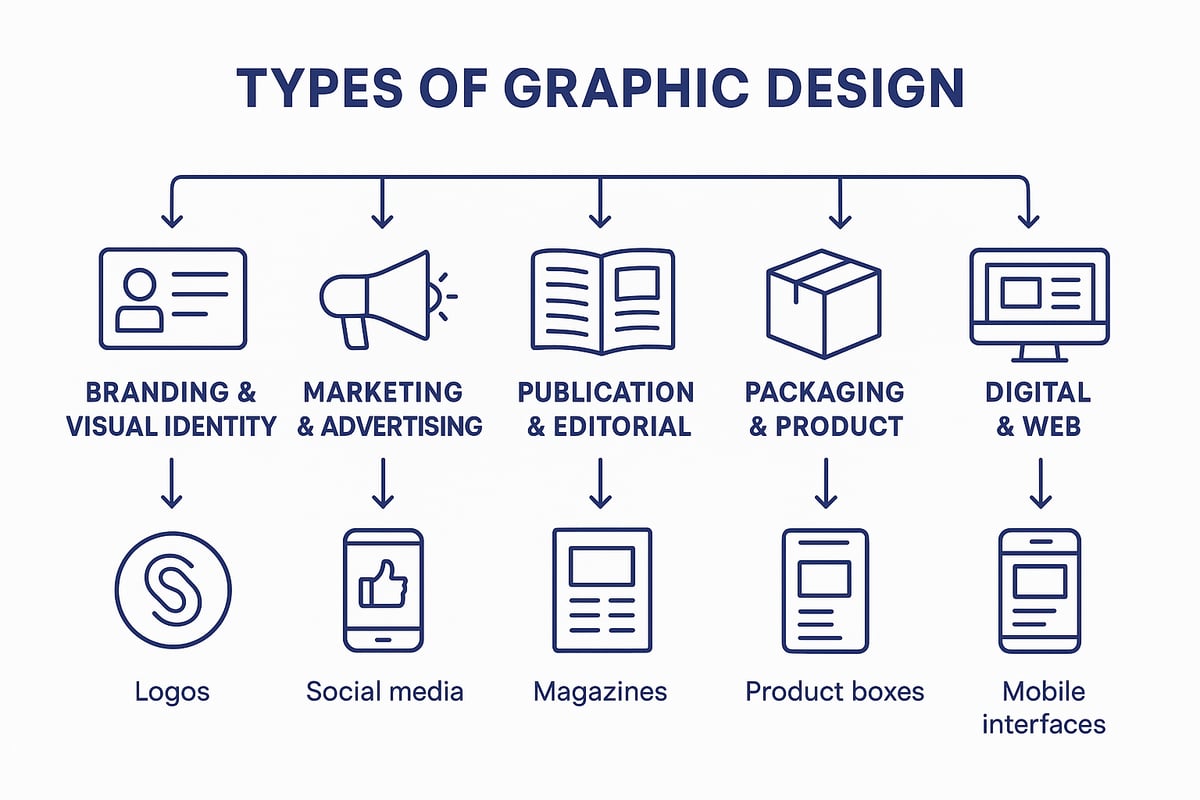
Graphic design is what brings ideas to life across countless industries. From shaping brand images to delivering seamless digital experiences, the different types of graphic design are essential for modern communication. Let us explore the major categories and their real-world impact.
Branding & Visual Identity Design
Branding and visual identity design define how a business is recognised at a glance. This type of work includes logo creation, colour palettes, typography, and comprehensive style guides. Consistency across these elements is crucial for building trust and recognition.
Graphic design is what ensures that brand visuals make a lasting impression, whether on signage or digital platforms. Think of iconic logos like Apple or Nike, which are instantly recognisable worldwide. According to industry data, consistent branding can boost revenue by 23 percent.
For a deeper look at how branding is used in specific industries, check out this guide on Branding in real estate.
Marketing & Advertising Design
In marketing and advertising, graphic design is what captures attention and drives action. Designers create visuals for campaigns, including advertisements, social media posts, banners, and brochures. Every asset aims to persuade, inform, or inspire the audience to take the next step.
Effective marketing design relies on visual storytelling, using images, typography, and layout to communicate value quickly. Viral social media graphics and high-converting ad creatives are prime examples of this discipline in action. The impact is measurable, with strong visuals often leading to higher engagement and conversion rates.
Publication & Editorial Design
Publication and editorial design bring order and style to magazines, newspapers, books, and digital publications. Graphic design is what makes content both readable and visually appealing, balancing text with imagery. Layout, grid systems, and typographic choices all play a vital role.
Magazine spreads, for example, use structured grids to guide the reader’s eye and create visual interest. As content consumption shifts online, editorial design adapts for e-books and digital magazines, maintaining the principles of clarity and hierarchy. Industry data confirms editorial design remains vital, even as formats evolve.
Packaging & Product Design
Packaging and product design combine function, brand identity, and shelf appeal. Graphic design is what makes products stand out in competitive retail spaces. Designers consider not only aesthetics but also regulatory requirements and sustainability trends.
Innovative packaging can boost sales dramatically. For instance, a unique box design might catch a shopper’s eye and influence their buying decision. A recent industry survey found that 72 percent of consumers say packaging affects their purchase choices, highlighting the importance of thoughtful design in this space.
Digital & Web Design
Today, digital and web design are at the forefront of how brands interact with audiences. Graphic design is what powers the look and feel of websites, apps, and digital interfaces. Designers focus on responsive layouts, accessibility, and user experience to ensure every touchpoint is seamless.
Mobile-first designs and interactive features are now standard, making digital design the primary face of most organisations. The result is a cohesive online presence that builds trust and drives engagement. In an increasingly connected world, digital design plays a central role in shaping perceptions and user journeys.
The Creative Process: From Concept to Execution
The journey from a blank canvas to a finished design is both structured and creative. Understanding the step-by-step workflow reveals that graphic design is what turns ideas into impactful visuals. Each phase in the process builds on the last, ensuring results that are both strategic and visually compelling.

Step 1: Research & Discovery
Every successful project begins with research. This is the phase where you dig deep to understand client goals, target audience, and the competitive landscape. Whether you are working solo or as part of a team, graphic design is what helps clarify direction from the outset.
Start by conducting interviews, reviewing competitor materials, and gathering inspiration. Tools like mood boards or user personas can help visualise and define the project’s tone. For example, a brand discovery workshop often uncovers unique selling points that shape the design approach.
Data shows that projects with thorough research are twice as likely to succeed, setting a strong foundation for every design.
Step 2: Ideation & Concept Development
After research, it is time to generate ideas. Ideation is where creativity flows and graphic design is what transforms gathered insights into visual concepts. Brainstorming sessions, mind mapping, and rapid sketching are common techniques.
Designers create multiple options, exploring colour palettes, layouts, and imagery. Wireframes and rough drafts help visualise these ideas, making it easier to share and refine with stakeholders.
Collaboration is crucial at this stage. Feedback from peers or clients leads to stronger concepts. The goal is to arrive at a creative direction that aligns with project objectives and resonates with the intended audience.
Step 3: Design & Iteration
This is where initial ideas become tangible. Using software like Adobe Illustrator or Figma, designers create digital drafts. Graphic design is what brings sketches to life, allowing for detailed refinement.
The process is iterative. Designers seek feedback, make adjustments, and test different variations, such as A B testing ad creatives to determine what works best. This approach minimises costly errors later on and ensures the design is both effective and polished.
Attention to detail and flexibility are essential. By embracing an iterative mindset, you can adapt quickly to feedback and deliver higher-quality outcomes.
Step 4: Finalisation & Delivery
Once the design is approved, the focus shifts to preparing assets for launch. At this stage, graphic design is what ensures files are print-ready, web-optimised, and consistent across platforms.
Tasks include checking colour profiles, verifying file formats, and ensuring accessibility standards are met. For example, exporting assets for both digital and print use guarantees a seamless brand presence.
Quality control is vital. A meticulous approach prevents last-minute issues and upholds professional standards, making sure the final product reflects the creative vision and meets client expectations.
Step 5: Measuring Impact & Continuous Improvement
The process does not end at delivery. Measuring outcomes is key to understanding how effective your design truly is. Graphic design is what facilitates this evaluation, connecting visual communication with real-world results.
Collect feedback from users and clients, and analyse metrics like engagement, conversions, or brand awareness. Use these insights to refine future work.
Continuous improvement keeps brands relevant and ensures long-term success. By embracing feedback and data-driven updates, designers can evolve alongside changing trends and audience needs.
Digital Transformation & The Future of Graphic Design
The world of creative communication is changing rapidly, and graphic design is what sets the pace. In 2026, designers face new challenges and opportunities as technology evolves, digital media dominates, and audiences expect more personalised, accessible experiences. Let’s explore how these trends are shaping the future.
The Shift to Digital-First Design
In today’s landscape, graphic design is what drives engagement across every digital touchpoint. Digital-first thinking means that websites, apps, and social media are now the primary spaces for brand interaction. Workflows have shifted to cloud-based platforms like Figma and Webflow, making real-time collaboration and feedback seamless, even across remote teams.
Designers quickly adapt to rapid prototyping and instant revisions, using digital tools for everything from concept to delivery. According to industry estimates, 90% of design work now happens in digital environments. If you want to stay ahead, keeping up with Graphic Design Trends 2026 is essential for understanding new styles, immersive experiences, and the latest visual innovations.
The Rise of AI & Automation in Design
Artificial intelligence is transforming what graphic design is what it means to be creative. AI-powered tools can generate layouts, suggest colour palettes, and even create custom images, helping designers work faster and more efficiently. With automation handling repetitive tasks, professionals can focus on strategy, storytelling, and high-level creative direction.
For example, AI-assisted branding tools now help generate logo variations and marketing assets in seconds. This shift not only enhances productivity but also opens up new possibilities for experimentation and innovation. As designers embrace these technologies, they spend less time on routine work and more time pushing creative boundaries.
Accessibility & Inclusive Design
Accessibility is now a non-negotiable part of what graphic design is what makes communication effective for everyone. Designers have a responsibility to ensure their work is usable by people with disabilities, following guidelines such as:
- High colour contrast between text and background
- Readable, scalable fonts
- Descriptive alt text for images
- Logical, keyboard-friendly navigation
Accessible websites and apps that meet WCAG 2.1 standards not only reach more users but also build trust and credibility. With 15% of the world’s population living with a disability, inclusive design is essential for modern brands.
Sustainability & Ethical Considerations
Consumers care about the impact of their choices, which means graphic design is what helps brands demonstrate sustainability and ethics. Eco-friendly design practices include using recycled materials, opting for digital campaigns instead of print, and minimising waste in packaging.
Ethical design goes beyond the environment. It means avoiding manipulative visuals, respecting privacy, and communicating honestly. For example, many brands now reduce print waste by prioritising digital-first strategies. Adopting sustainable and ethical practices not only builds loyalty but also positions brands as leaders in responsible communication.
Evolving Roles & Skills for Designers
As the industry evolves, so does what graphic design is what designers need to succeed. The most in-demand skills for 2026 include:
| Skillset | Why It Matters |
|---|---|
| UX/UI Design | Enhances user experience |
| Motion Graphics | Engages audiences visually |
| Coding Basics | Builds interactive content |
| Data Visualisation | Communicates insights clearly |
Lifelong learning is crucial, with 63% of designers upskilling in digital tools last year. Many professionals are moving into hybrid roles, such as UX/UI designer, to stay relevant. Staying flexible and curious will keep your skills sharp as the field continues to change. For more on the future of visual communication, explore Graphic Design Trends for 2026.
Graphic Design in Practice: Career Paths, Tools & Resources
Breaking into a creative field means understanding not just the art, but also the real-world pathways, tools, and resources that make success possible. If you have ever wondered, graphic design is what opens diverse doors and shapes future-forward careers for visual thinkers.
Career Opportunities & Industry Outlook
The field of graphic design is what fuels a range of career paths, from in-house teams to creative agencies and freelance ventures. Roles like art director, brand designer, UI/UX designer, and packaging designer are in high demand.
Many professionals start in junior positions and progress to senior or specialist roles. Some transition from graphic design to UX or digital product design for broader opportunities and higher earning potential.
Freelancing is increasingly popular, offering flexibility and autonomy. For practical insights, explore these tips for freelance graphic designers to help you navigate your first year and build a sustainable career.
Essential Tools & Software for Modern Designers
Mastering the right tools is crucial because graphic design is what brings creative ideas to life. Industry staples include Adobe Creative Suite (Photoshop, Illustrator, InDesign), Figma for collaborative design, Canva for quick content, Webflow for web projects, and Procreate for digital illustration.
Cloud-based platforms make teamwork seamless, supporting real-time feedback and version control. Tool proficiency is a high priority for employers, and designers who keep up with software updates remain competitive.
- Adobe Creative Suite
- Figma
- Webflow
- Canva
- Procreate
Building a Standout Portfolio
A compelling portfolio is the gateway to opportunity. For those asking, graphic design is what sets applicants apart visually and strategically. Include diverse work samples: branding, digital, print, and UI projects.
Add project descriptions that explain your role, design rationale, and process. Visual consistency and easy navigation boost your chances of impressing recruiters. Portfolios with detailed case studies and before-and-after visuals demonstrate both skill and thought process.
According to industry surveys, strong portfolios increase job offers by 71 percent, making them a non-negotiable asset.
Learning Pathways & Professional Development
To stay ahead, continuous learning is essential. Routes include formal education, online courses, and mentorships. Platforms like Skillshare, Udemy, and Coursera offer up-to-date content on tools, trends, and techniques.
Self-taught designers often leverage online communities and resources to build expertise. Graphic design is what evolves with technology and trends, so regular skill upgrades keep you relevant. Seek feedback, attend webinars, and participate in design challenges to accelerate growth.
Cam Gomersall Design: Expert Digital & Graphic Design Solutions
Cam Gomersall Design is what many Australian businesses rely on for expert digital and graphic design solutions. With over a decade of experience, Cam crafts tailored brand strategies, visual identities, and digital solutions that drive measurable results.
Services include custom web design, logo creation, marketing collateral, and comprehensive brand discovery. The studio’s end-to-end approach ensures consistency and quality across all touchpoints.
Clients benefit from direct collaboration, quick turnarounds, and ongoing support, making Cam Gomersall Design a trusted partner for small to medium enterprises.
Top Resources & Communities for Graphic Designers
A thriving career also depends on access to quality resources and active communities. Leading platforms include:
- Interaction Design Foundation
- Figma Resource Library
- Behance
- Dribbble
Joining online communities fosters networking, inspiration, and skill growth. Participate in masterclasses and design challenges to build your profile and stay inspired. Engaged designers often progress faster thanks to shared feedback and industry connections.
As you’ve discovered throughout this guide, graphic design is the key to building memorable brands, communicating ideas clearly, and making your business stand out in an increasingly digital world. Whether you’re looking to refresh your brand, launch a new website, or create marketing collateral that truly resonates, partnering with an experienced designer can make all the difference. With over a decade of expertise, I specialise in tailored digital and graphic solutions that deliver measurable growth and lasting impact. If you’re ready to elevate your visual communication and achieve your business goals, Start your project today.