Table Of Contents
A powerful logo is often the first impression your brand makes, shaping how customers perceive your business and setting you apart in a crowded marketplace. The right logo design solutions can elevate your brand identity, drive recognition, and support long-term business growth. In this comprehensive guide, you will discover expert advice, current industry trends, and practical tips to craft a logo that captures your vision. Explore essential principles, step-by-step processes, partner selection strategies, technology tools, and future-proofing techniques to ensure your logo remains distinctive and effective.
Understanding Modern Logo Design Principles
The foundation of effective logo design solutions lies in understanding how colour, shape, and typography influence perception. Colours evoke emotions; blue signals trust, red captures attention, and green suggests growth. Shapes also matter—circles create a sense of unity, while angular designs convey strength. Typography, from bold sans-serifs to elegant scripts, can reinforce your brand’s tone.
Minimalist logos consistently outperform cluttered designs. Simplicity enhances memorability and ensures your logo remains recognisable in any context. According to Logo Design Tips from Adobe, focusing on clean lines and limited colours helps brands achieve maximum impact. This approach is central to modern logo design solutions, making logos adaptable across all platforms.
A successful logo must align with your brand’s mission and values. The best logo design solutions ensure every element—colour, font, and iconography—reflects your unique identity. Versatility is crucial; your logo should look great on digital screens, print materials, and merchandise. Scalability matters, too, so designs remain crisp from tiny app icons to massive billboards.
Iconic brands like Nike and Apple exemplify these principles. Their logos are simple, scalable, and instantly recognisable worldwide. In fact, 75% of consumers recognise a brand by its logo, highlighting the importance of thoughtful design. Responsive and adaptive logos are now essential, ensuring visibility across all devices and channels.

Step-by-Step Process for Crafting a Memorable Logo
Creating a standout brand identity requires a strategic approach. A well-structured process ensures your logo design solutions align with your business goals and audience expectations.

Discovery and Research
The first step in effective logo design solutions is thorough research. Analyse your competitors to uncover industry trends and visual standards. Identify what appeals to your target audience by reviewing their preferences and behaviours.
Gather your brand’s mission, vision, and values to use as a foundation. For example, a tech startup that invested in deep research created a visual identity that instantly set them apart. Data shows that 60% of top brands conduct extensive research before beginning logo design.
Concept Development and Sketching
Next, move to brainstorming creative directions. Explore different styles, and sketch multiple ideas before committing to any one concept. Mood boards and inspiration sources play a vital role in shaping early ideas.
Hand-drawn sketches often spark fresh thinking and have inspired many iconic logos. For practical tips and real-world inspiration, check out Restaurant Logo Design Ideas, which showcases how research and creativity combine in successful projects.
Digital Design and Refinement
With concepts in place, transition to digital tools such as Adobe Illustrator or Figma. These platforms are essential for scalable logo design solutions. Refine your ideas iteratively and seek feedback to ensure each version aligns with your goals.
Balance creativity with practical constraints like scalability and readability. Data reveals that 85% of designers rely on vector-based software to maintain clarity across all formats.
Testing and Finalisation
Test your logo in real-world scenarios, such as on websites, packaging, and merchandise. Collect feedback from stakeholders and your intended audience to identify strengths and needed adjustments.
Prepare final files in various formats, including SVG, PNG, and EPS, to ensure versatility. Some businesses A/B test their logos to measure audience preference, helping them make informed decisions for lasting impact.
Choosing the Right Logo Design Partner
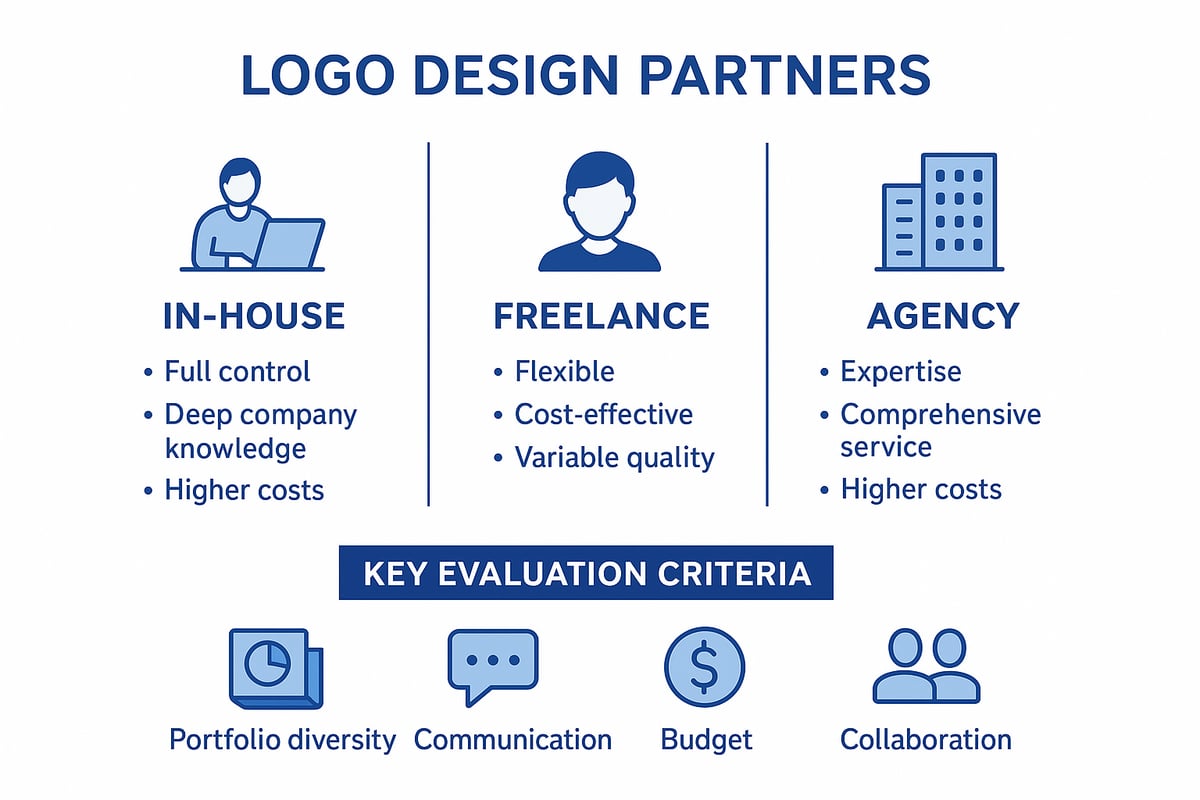
Selecting the right creative partner is crucial for achieving successful logo design solutions. The approach you choose directly impacts your brand’s perception and long-term recognition. Should you build an in-house team, hire a freelancer, or partner with an agency? Each option offers unique benefits and challenges.
| Option | Pros | Cons |
|---|---|---|
| In-house | Control, brand familiarity | Limited expertise, ongoing cost |
| Freelancer | Cost-effective, flexible, personal | Variable quality, less capacity |
| Agency | Broad expertise, full service, scalability | Higher cost, less direct control |
When evaluating logo design solutions, always review portfolios for diversity and originality. Look for evidence of work across different industries and check if the designer’s style aligns with your brand vision. Open communication and a collaborative process are essential for a successful outcome.
Before making your decision, consider your budget, timeline, and specific needs. Ask vital questions about their creative process, revision policy, and ownership rights. Be wary of red flags like overused templates, generic designs, or poor client feedback.
Small businesses often benefit from professional expertise, gaining a distinct advantage in crowded markets. According to DesignRush, businesses with professionally designed logos achieve 30 percent higher brand recognition. For those seeking comprehensive logo design solutions, Professional Logo Design Services provide tailored support from concept to completion.
Choosing wisely ensures your logo becomes a true asset, setting your brand apart and building trust with your audience.
Leveraging Technology and Tools in Logo Design
Technology plays a pivotal role in modern logo design solutions, enabling designers to create, refine, and deliver high-impact visuals efficiently. Tools like Adobe Illustrator, Figma, and Canva have become industry standards, offering versatility and precision for every stage of the creative process.
AI-powered logo generators are reshaping the landscape of logo design solutions by offering speed and accessibility. These tools can rapidly produce logo concepts, but they often lack the nuance of human creativity. For a deeper dive, explore the latest AI Logo Generator Statistics & Trends to understand their growing impact and limitations in the industry.
Collaboration is also evolving with platforms like Slack and Trello, which streamline communication between clients and designers. Cloud-based storage and project management tools ensure files are organised, accessible, and backed up, with 70% of designers reporting greater efficiency using these systems.
Security and intellectual property protection are vital in any logo design workflow. Version control prevents accidental loss or overwrites, while secure cloud environments safeguard sensitive assets. By leveraging technology, businesses can accelerate feedback cycles, maintain design integrity, and achieve reliable results from concept to completion.
Future-Proofing Your Logo: Trends and Best Practices
A future-ready logo is essential for lasting brand impact. As business environments evolve, so must your visual identity. The best logo design solutions anticipate change, ensuring your logo remains relevant and effective for years to come.
Adaptability is key. Responsive and variable logo systems help brands maintain clarity across devices and platforms. Recent logo design trends highlight the value of dynamic identities that can be adjusted for different contexts, from social media profiles to physical signage.
Accessibility and inclusivity are now central to logo design solutions. Choose colours and contrasts that work for all users, including those with visual impairments. Simple shapes and clear typography ensure your logo is easily understood by a broad audience.
Sustainable practices are gaining momentum. Digital-first approaches reduce environmental impact, while eco-friendly print materials support responsible branding. Regularly reviewing your logo helps you adapt to shifting values and audience expectations.
Legal protection is vital. Trademarking your logo secures your intellectual property and prevents misuse. Consistent use across all media builds recognition and trust. For detailed guidance on building a resilient brand identity, explore Brand Identity and Logo Design Insights.
Notably, 40% of brands update their logo every 5–10 years, reflecting an ongoing commitment to relevance. Brands that refresh their logos thoughtfully maintain strong connections with their audience and stand out in competitive markets.
You’ve now seen how a thoughtful logo can shape your brand’s perception, drive recognition, and set you apart in a competitive market. Whether you’re refining an existing identity or starting from scratch, having a dedicated design partner makes all the difference. At Cam Gomersall Design, I bring over a decade of experience in branding and digital design to help you navigate every step—from research and concept to scalable, future-proof solutions. If you’re ready to create a logo that truly reflects your business and supports your growth, let’s connect and start your project.