Table Of Contents
The world of branding is changing fast as digital platforms take centre stage and competition intensifies. Brands that want to make a lasting impression in 2026 must rethink how they approach their logo strategy to stand out and drive recognition.
This article uncovers seven essential logo strategy tips designed to help your brand rise above the noise, connect with your audience, and remain relevant far into the future. Get ready for actionable insights on research, adaptability, storytelling, consistency, and more—each step will give you the edge you need for a future-proof brand identity.
The Evolving Role of Logos in Brand Strategy
The landscape of logo strategy is undergoing a significant transformation as brands adapt to the demands of a digital-first world. Today, a logo is far more than a static symbol. It acts as a central pillar in brand strategy, shaping consumer perception, driving recognition, and anchoring every brand touchpoint.

Logos as the Cornerstone of Brand Identity
A strong logo strategy positions the logo as the primary visual anchor of any brand. Logos are often the first element consumers notice and remember. In fact, research indicates that for 75% of consumers, the logo is the most recalled brand asset, underscoring its power in shaping brand perception.
The shift from static marks to dynamic, adaptable assets is evident in brands like Apple and Nike. Their logos transcend language and cultural barriers, becoming universally recognised symbols. Modern logos must perform across a spectrum of platforms, from mobile screens to billboards, and even within motion graphics.
For a deeper dive into how logos underpin effective brand identity, explore this brand identity and logo design guide that details the strategic relationship between visual identity and brand perception.
Trends Shaping Logo Strategy in 2026
Emerging trends are redefining what makes a successful logo strategy in 2026. The proliferation of digital touchpoints means logos must be responsive and adaptable, ensuring clarity and impact at any size or context. Minimalism and accessibility are now central, as simple, clean logos outperform complex designs in digital environments.
Statistics reveal that 60% of top-performing brands use minimalistic logos, aligning with consumer preferences for memorable and recognisable marks. The rise of motion, animation, and interactive logos further reflects the digital-first mindset, allowing brands to inject personality and dynamism into their visual assets.
To stay ahead, brands must embrace these trends and incorporate flexibility and simplicity into their logo strategy, ensuring relevance across emerging platforms.
The Connection Between Logo and Brand Experience
A well-crafted logo strategy does more than boost visibility—it shapes the entire brand experience. From the first impression to long-term loyalty, a logo influences how audiences feel and interact with a brand. Consistency is key; brands that maintain a unified logo presence across all channels build greater trust and credibility.
Consider how brands like Mastercard and Instagram have evolved their logos to reflect changing narratives while preserving core identity. This approach ensures that the logo remains relevant and aligned with broader brand messaging.
Aligning logo design with overall brand strategy enhances recognition, fosters emotional connection, and creates a seamless experience for consumers at every touchpoint.
7 Essential Logo Strategy Tips For Standout Brands In 2026
Building a standout brand in 2026 demands a forward-thinking logo strategy. Each tip below is crafted to help your business rise above the competition, foster loyalty, and adapt confidently to the digital landscape. Let us break down the actionable steps you need to future-proof your brand identity.

1. Research Your Audience and Industry Thoroughly
The foundation of an effective logo strategy is a deep understanding of your target audience and industry. Before sketching a single concept, invest time in discovering who your customers are, what they value, and how they perceive visual cues in your sector.
Start by mapping out key demographics such as age, location, and occupation. Dive deeper into psychographics like interests, attitudes, and lifestyle. Cultural factors also play a significant role in how a logo is received, especially in a global market.
Competitor analysis is vital. Identify what visual elements dominate your industry and pinpoint gaps where your brand can stand out. A well-executed logo strategy leverages these insights to create differentiation.
Consider the following methods to gather actionable insights:
- Run surveys and polls with existing or prospective customers.
- Organise focus groups for in-depth qualitative feedback.
- Use social listening tools to monitor conversations around visual branding.
- Analyse industry reports and trend forecasts.
Brands that skip this step risk creating logos that miss the mark. For example, when a major beverage company rebranded without audience input, it faced backlash and rapid market share loss. On the other hand, a tech startup that targeted Gen Z used digital-native research to inspire a bold, relatable logo, resulting in higher engagement.
For more actionable strategies on building an effective logo strategy, explore Logo design solutions and tips.
Stay updated with evolving expectations. What worked in 2020 may not resonate with audiences in 2026. Continuously refine your research to ensure your logo strategy remains relevant.
2. Prioritise Simplicity and Memorability
A simple logo is the cornerstone of a strong logo strategy. Simplicity ensures that your logo is instantly recognisable, easily recalled, and versatile across all touchpoints. In fact, 78% of consumers recall simple logos more easily, making this principle non-negotiable for brands aiming to lead in 2026.
The psychology behind clean design is clear. A clutter-free logo is less likely to overwhelm and more likely to create a lasting impression. Minimalistic logos cut through digital noise and perform well on everything from mobile apps to billboards.
To distil complex brand ideas into a single, memorable mark:
- Start with your core message and values.
- Reduce elements to the essentials, removing unnecessary details.
- Use strong, distinct shapes and limited colour palettes.
Brands like Google and Mastercard have simplified their logos over time, increasing their impact and flexibility. Overcomplicating your design with trends or excessive detail can dilute your message and create confusion.
Test logo memorability by conducting quick-recognition surveys or asking participants to redraw your logo after a brief glance. Iteration is key to perfecting this aspect of your logo strategy.
3. Design for Versatility and Scalability
A successful logo strategy ensures your logo looks great everywhere, from tiny favicons to massive outdoor banners. Versatility and scalability are essential in a digital-first world, with brands needing to adapt across a wide range of platforms and media.
Start with a vector-based design, which allows for infinite scaling without loss of quality. Responsive logo systems, consisting of primary, secondary, and icon-only versions, enable your brand to remain consistent yet flexible.
Dynamic marks and adaptive logo suites are on the rise. Brands like FedEx and Google use logo variations that can adjust to different applications, retaining core identity while meeting specific needs.
Guidelines for optimal versatility:
- Create monochrome and alternative versions for use in different contexts.
- Test your logo at multiple sizes to ensure legibility and impact.
- Plan for motion and animation if your brand is active in digital or video spaces.
Regularly audit your logo performance as new platforms emerge. A versatile logo strategy guarantees that your brand remains strong and recognisable, regardless of where it appears.
4. Ensure Consistency Across All Brand Touchpoints
Consistency is the backbone of trust and recognition in any effective logo strategy. Inconsistent logo usage can erode brand equity, as customers may question authenticity or become confused by mixed visuals.
Research shows that brands with consistent visual identities achieve up to 3.5 times higher brand visibility. To achieve this, develop comprehensive logo usage guidelines that cover colour, positioning, spacing, and background control.
Best practices include:
- Training internal teams and external partners on correct logo application.
- Using digital asset management tools to centralise and distribute approved logo files.
- Setting up clear approval processes for new materials.
Brands like Coca-Cola and BMW are renowned for their unwavering logo consistency, reinforcing their identity across decades and continents.
Schedule periodic reviews of your guidelines to accommodate new channels or technologies. This ensures your logo strategy adapts without sacrificing consistency.
5. Integrate Storytelling and Meaning
A logo is more than a visual mark, it is a vessel for your brand’s story. Embedding meaning into your logo strategy creates emotional resonance and strengthens recall. Competitor insights suggest that logos with layered meaning are more memorable and foster deeper connections.
Techniques for weaving story into logo design include:
- Using symbolism that reflects your values or mission.
- Incorporating hidden messages or visual cues (e.g., Amazon’s arrow, FedEx’s negative-space arrow).
- Choosing colours and shapes that align with your narrative.
Storytelling differentiates your brand in crowded markets. For instance, the arrow in Amazon’s logo not only represents delivery but also customer satisfaction, reinforcing the company’s core promise.
Involve stakeholders in uncovering authentic stories that can inform your logo’s concept. Use storytelling in your launch and marketing campaigns to amplify the impact of your logo strategy.
6. Embrace Adaptability and Future-Proofing
Adaptability is critical for a modern logo strategy. As technology, platforms, and audience preferences evolve, your logo must remain relevant without losing its core identity.
Rigid, outdated logos can hold brands back, while those that embrace change thrive. Strategies for future-proofing your logo include:
- Designing modular elements that can be rearranged or animated.
- Creating dynamic marks that adapt to different contexts and media.
- Planning for periodic reviews and updates to keep pace with the market.
Brands like Burger King and Instagram have refreshed their logos to align with new eras, balancing timelessness with contemporary appeal. Flexible colour palettes and iconography further ensure your logo strategy can adapt to any future trend.
The key is to remain aware of trends without becoming overly reliant on them. A logo that is both timeless and adaptable will serve your brand for years to come.
7. Test, Iterate, and Gather Feedback
No logo strategy is complete without rigorous testing and iteration. Validating your logo with real audiences before launch can prevent costly missteps and maximise impact.
Effective testing methods include:
- A/B testing different logo versions.
- Conducting focus groups for qualitative insights.
- Using online surveys to gather quantitative data.
Brands that invest in testing and iteration report higher recognition and recall rates. Both qualitative and quantitative feedback are valuable, offering a holistic view of your logo’s effectiveness.
Consider this simple table for testing methods:
| Method | Benefit | Best For |
|---|---|---|
| A/B Testing | Data-driven comparison | Website, apps |
| Focus Groups | In-depth feedback | Rebranding efforts |
| Online Surveys | Broad audience input | Early concepts |
Build feedback loops into your brand management process. Monitor logo performance post-launch and remain open to updates as your business and audience evolve. A strategic, iterative approach ensures your logo strategy delivers measurable results.
The Impact of a Strong Logo Strategy on Brand Growth
A strong logo strategy is not just about design, it is a catalyst for tangible business growth. Research consistently shows that brands with a strategic approach to logo design enjoy higher brand recall and stronger customer loyalty. In fact, a well-executed logo strategy can be the difference between a forgettable brand and one that commands attention in a crowded market.

From Recognition to Revenue: The Business Case for Strategic Logos
A compelling logo strategy anchors brand identity and drives measurable outcomes. Brands that invest in strategic logo development see up to 80 percent improvement in unaided brand recall, according to industry studies. This elevated recognition translates into increased customer trust, repeat purchases, and the ability to command premium pricing.
Consider the following table summarising business outcomes before and after a logo strategy overhaul:
| Metric | Before Overhaul | After Overhaul |
|---|---|---|
| Brand Recall | 40% | 75% |
| Customer Loyalty | Moderate | High |
| Word-of-Mouth Referrals | Low | Strong |
| Market Share | Flat | Growing |
Brands like Mastercard and Burger King have demonstrated how a refreshed and consistent logo strategy can spark new growth and revitalise public perception. After modernising their logos, both companies reported a surge in positive brand sentiment and a measurable lift in sales.
The compounding effect of a recognisable logo extends to referral marketing. Customers are more likely to recommend a brand whose logo they remember and trust, fuelling organic growth. Ultimately, a strategic logo is an investment that pays dividends by reinforcing every interaction with your brand.
Common Pitfalls to Avoid in Logo Strategy
Despite its importance, many brands fall into common traps when developing their logo strategy. Blindly chasing design trends, neglecting audience research, and inconsistent logo application are frequent mistakes that can erode brand equity over time. These missteps often result in lost consumer trust, costly rebrands, and confusion in the market.
To avoid these pitfalls, brands should regularly self-audit their logo strategy. Here are some quick tips:
- Review all brand touchpoints for logo consistency.
- Gather feedback from both customers and team members on logo recall.
- Benchmark your logo against competitors for differentiation.
- Ensure your logo aligns with your core brand values and mission.
- Use tools and processes outlined in Developing a successful logo to guide research and iteration.
Competitor insights reveal that failed logo launches often stem from skipping critical research or rushing through the design process. By focusing on these fundamentals, brands can sidestep costly errors and build a logo strategy that supports long-term growth.
Logo Strategy and the Future of Brand Differentiation
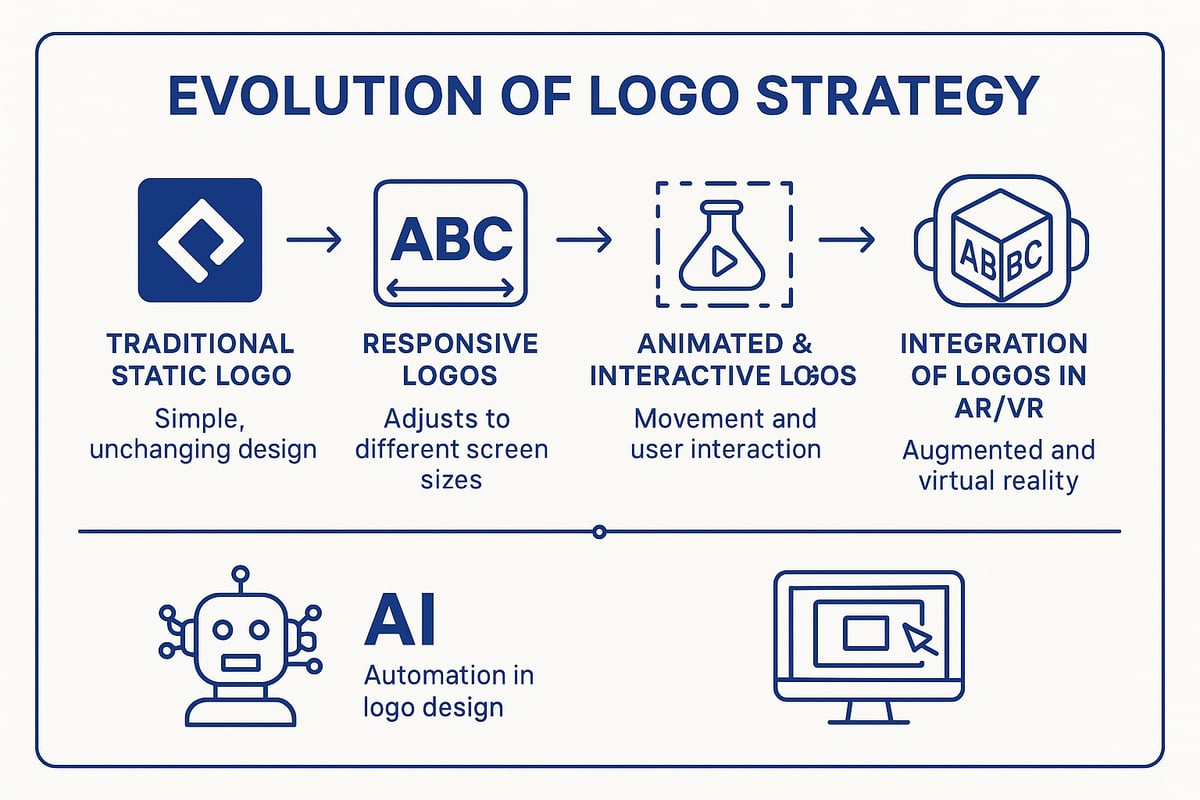
The landscape of logo strategy is transforming at an unprecedented pace. As digital platforms multiply and technology advances, logos now serve as adaptable assets, not just static symbols. Brands that want to stand out must rethink their approach, ensuring their logo strategy is ready for future challenges and opportunities.
Logos as Dynamic Assets in a Digital World
Logo strategy is no longer about creating a single image for all uses. Today, brands are shifting towards dynamic, adaptive logos that respond to a wide range of digital contexts. Whether it is a tiny favicon in a browser tab or an animated mark on a mobile app, logos must be flexible and responsive.
AI and automation are rapidly changing the way logos are designed and managed. Advanced tools now allow brands to generate logo variations, test them across platforms, and even personalise logos for different audience segments. This technology-driven approach ensures that your logo strategy remains relevant as digital channels evolve.
Emerging platforms such as AR, VR, and voice interfaces are also influencing logo strategy. Brands are experimenting with 3D, tactile, and interactive logos that enhance user engagement in immersive environments. For a closer look at how motion-first branding and AI are shaping this future, see Logo Design Trends for 2026: What Top Designers Are Doing.
Industry leaders predict that by 2026, successful brands will treat their logos as living assets. Regular updates, motion elements, and adaptability across new devices will be central to a resilient logo strategy. Staying proactive and open to technological change is essential for keeping your brand at the forefront.
Building a Standout Brand Through Holistic Strategy
A future-ready logo strategy is only as strong as the brand ecosystem supporting it. The most successful brands align their logo, messaging, and customer experience to create a seamless identity across every touchpoint. This integrated approach ensures that the logo acts as a beacon, guiding customers and reinforcing trust.
Holistic logo strategy involves more than just design. It requires collaboration between designers, marketers, and leadership to embed the brand’s core values and unique story into every visual element. Brands like Google and Mastercard have led the way by evolving their logos in tandem with new messaging and user expectations.
To achieve standout differentiation, brands must regularly review their logo strategy, ensuring it adapts to changing market needs without losing its essence. For practical inspiration and the latest techniques in adaptive logo design, explore 10 Logo Design Trends for 2026.
Here are actionable steps for building a holistic logo strategy:
- Audit your current logo across all platforms for consistency.
- Involve stakeholders to align on brand values and story.
- Test logo variations with target audiences and gather feedback.
- Plan for regular updates as digital environments shift.
Future-proofing your logo strategy is not a one-time task. It is an ongoing process that demands attention to every aspect of your brand’s presence and the ever-changing digital world.
Now that you have a clear roadmap to building a future ready logo strategy, you might be wondering how to put these insights into action for your own brand. With over a decade of experience, I specialise in crafting distinctive identities that don’t just look great, but also drive results and growth. If you’re ready to elevate your brand above the competition in 2026, let’s start turning your vision into a reality together.
Start your project