Table Of Contents
In today’s digital-first world, web design branding is the foundation of business credibility and success. A powerful brand presence shapes how visitors perceive you and builds trust within seconds of landing on your site.
When your web design branding is strategic, it sets you apart in a crowded marketplace, helping you capture attention and convert visitors into loyal customers. The right approach can transform your website into a memorable, high-performing asset.
In this article, you’ll discover seven essential web design branding tips. We’ll cover visual identity, user experience, consistency, storytelling, and more—each backed by proven strategies and real-world examples to help you build a cohesive, high-converting online presence.
The Importance of Branding in Web Design
In today’s digital world, web design branding is the cornerstone of a successful online presence. Effective branding shapes how visitors perceive your business from the moment they land on your website. It creates an immediate sense of trust and professionalism, making your site memorable in a sea of competitors.

What is Branding in the Context of Web Design?
Branding in web design branding goes far beyond a logo or a colour scheme. It is the sum of your business’s values, mission, and the emotional connection you create with your audience. When someone visits your website, branding sets the stage for their experience and influences how much they trust your business.
A strong visual identity is a direct reflection of your business personality and promise. This includes how you use colour, typography, and imagery to convey your unique story. While web design is the craft of building and structuring your website, branding is what breathes life and meaning into every visual and written element.
The distinction between branding and web design is important, yet the two are deeply interconnected. Branding provides the foundation, and web design brings it to life in a digital format. Take Apple’s website as a leading example: every detail, from the minimalist layout to the crisp imagery, showcases a cohesive and unmistakable brand identity. This approach creates instant recognition and a sense of quality.
Web design branding is also a key driver of customer loyalty and advocacy. When users identify with your brand’s story and values, they are more likely to become repeat visitors and recommend your business to others. This emotional connection sets your business apart in a crowded digital marketplace.
The Business Impact of Strong Web Design Branding
The impact of web design branding on business performance is both immediate and measurable. Research shows that 75% of users judge a company’s credibility based on its website design. In fact, web design influences 94% of first impressions, underscoring the direct link between branding and trust.
Consistent branding across your website increases brand recognition and recall. When users see a harmonious visual identity and clear messaging, your business becomes more memorable. This consistency extends to every digital touchpoint, reinforcing your credibility and authority.
A strong web design branding strategy attracts your ideal audience by communicating your values and unique selling points. It supports marketing efforts and makes campaigns more effective, as users immediately understand what your brand stands for. The result is higher conversion rates and improved customer retention.
Consider a business that revamped its site with unified branding elements: the outcome was not just more visitors, but a significant boost in enquiries and sales. A well-branded website builds trust, inspires action, and turns casual browsers into loyal customers. Ultimately, web design branding is a powerful lever for sustainable business growth.
Key Elements of Effective Web Design Branding
Effective web design branding is built on several interconnected elements that shape how visitors perceive your business. Each component plays a unique role in crafting a website that is visually engaging, trustworthy, and memorable. Let us explore the essential pillars that every digital brand should master.

Visual Identity: Colour, Typography, and Imagery
Visual identity is the foundation of web design branding. It includes your colour palette, typography, and imagery, all carefully selected to reflect your brand’s personality and values. The right colours can evoke emotion and reinforce your brand’s promise. For example, blue often conveys professionalism, while green suggests sustainability.
Typography acts as your brand’s voice in written form. The fonts you choose should be legible and align with your business character. A bold, modern font can signal innovation, while a classic serif suggests tradition. Imagery is equally important, offering visual storytelling that builds emotional resonance and improves recognition.
Consistency in visual elements across your website is crucial. By establishing a clear visual hierarchy, you guide users’ attention and create a seamless experience. For a deeper dive into how to structure your site visually, see visual hierarchy in web design. A strong visual identity ensures your web design branding stands out in any market.
Brand Voice and Messaging
Brand voice is the personality your business expresses through words, tone, and style. In web design branding, a distinct voice sets you apart and fosters connection with your audience. Define whether your tone is formal, playful, or authoritative, and ensure this is reflected in all your website content.
Effective messaging goes beyond catchy taglines. It should be woven into calls-to-action, headings, and even microcopy. Storytelling adds depth, sharing your mission and values in a way that resonates emotionally. This narrative approach can transform a standard landing page into a memorable brand touchpoint.
Unified messaging throughout your website supports a strong web design branding strategy. It reassures visitors, builds trust, and encourages them to engage further with your business. Brands that maintain a consistent voice are more likely to be remembered and recommended.
Brand Consistency Across Digital Touchpoints
Brand consistency is vital for reinforcing trust and credibility. In web design branding, this means using your logo, colour palette, and messaging uniformly on every page and digital platform. Consistency prevents confusion and ensures users instantly recognise your brand wherever they encounter it.
Establishing clear brand guidelines is essential. These rules cover logo usage, colours, typography, and tone, helping your team and partners maintain a cohesive look and feel. Consistent branding across all channels, from your website to social media, strengthens your professional image.
When web design branding is inconsistent, users may question your reliability. On the other hand, a unified digital presence encourages customer loyalty and supports long-term business growth. Regularly reviewing your site for consistency ensures your brand remains strong and recognisable.
7 Essential Web Design Branding Tips
Building a powerful online presence starts with mastering web design branding. The right strategy will help your business stand out, connect with your audience, and drive measurable results. In this section, discover seven practical tips to transform your website into a memorable, consistent, and high-converting brand experience.

1. Establish a Clear and Memorable Visual Identity
Your visual identity is the foundation of web design branding. It includes your logo, colour palette, and typography, all working together to create a distinct look and feel. A strong visual identity reflects your brand’s values and appeals directly to your target audience.
- Develop a logo that is instantly recognisable and scalable.
- Select a colour palette that evokes the right emotions and aligns with your mission.
- Choose fonts that represent your brand’s personality and remain readable across devices.
High-quality, on-brand imagery reinforces your web design branding and sets you apart in a crowded marketplace. Visual harmony across every page builds trust and keeps your brand top-of-mind.
For more on this topic, see Brand identity and logo design. Creating a detailed style guide helps maintain consistency, ensuring your web design branding never wavers.
2. Prioritise User Experience (UX) and Accessibility
Web design branding is not just about looks, but also about how users interact with your site. Superior UX shows your audience that you value their time and needs. Intuitive navigation, clear pathways, and logical layouts make your site easy to use.
- Ensure menus are simple and predictable.
- Optimise page load times to reduce bounce rates.
- Use mobile-responsive layouts for seamless access on any device.
Accessibility is a critical part of web design branding. Use alt text for images, readable fonts, and sufficient colour contrast to make your website inclusive. When your site is easy to use, visitors associate positive experiences with your brand.
Regularly test your site with real users to uncover hidden issues. Strong web design branding relies on both form and function, ensuring every visitor feels valued.
3. Craft Consistent Brand Messaging and Tone
Consistency in messaging is a cornerstone of effective web design branding. Define your brand voice—whether friendly, authoritative, or playful—and use it across all content. From headlines to calls-to-action, every word should reinforce your identity.
- Align language style in headers, buttons, and body text.
- Repeat key messages throughout the user journey.
- Avoid jargon, keep messages clear and relatable.
Brands that maintain a unified tone are more memorable and trusted. Document your messaging guidelines so everyone on your team can contribute to consistent web design branding. This clarity builds instant recognition and trust with your audience.
4. Integrate Storytelling to Humanise Your Brand
Storytelling is a powerful tool for web design branding. Sharing your brand’s journey, mission, and values connects emotionally with visitors. Narratives on your homepage, About page, or in product descriptions transform your business from a faceless entity into a relatable story.
- Feature customer testimonials and real-life case studies.
- Highlight your company’s origin and purpose.
- Use storytelling elements in visuals and copy.
Web design branding that includes storytelling stands out. Homepages that open with a compelling brand story enjoy higher engagement rates. Incorporate storytelling throughout your site to create a lasting impression and foster loyalty.
5. Ensure Visual and Functional Consistency Across All Pages
Consistency is essential for strong web design branding. Apply the same visual standards—logo placement, colours, fonts—across every page. Consistent layouts and iconography reduce confusion and make navigation predictable.
- Use design systems or reusable components.
- Standardise button styles and navigation menus.
- Audit your site regularly for design discrepancies.
Functional consistency ensures users always know what to expect, building trust and loyalty. Inconsistent web design branding can confuse visitors and drive them away. Visual and functional harmony creates a seamless experience that supports your business goals.
6. Optimise for Mobile and Emerging Devices
Mobile optimisation is now a non-negotiable part of web design branding. With most web traffic coming from mobile devices, your site must look and function perfectly on every screen size.
- Use responsive design principles for flexible layouts.
- Optimise images and assets for fast mobile loading.
- Adapt branding elements so they remain clear and recognisable on small screens.
Touch-friendly menus and buttons are vital for accessibility. Test your web design branding on various devices and browsers to ensure consistency. Staying ahead with mobile optimisation keeps your brand accessible and relevant to every visitor.
7. Leverage Data and Feedback for Continuous Improvement
Web design branding is an ongoing process, not a one-time project. Use analytics to track how users interact with your site and which branding elements drive engagement. Collect feedback through surveys or chat tools to identify what works and what needs adjustment.
- Run A/B tests on design and messaging.
- Monitor conversion rates and user behaviour.
- Stay updated with design trends and evolving user preferences.
Brands that iterate and improve based on data experience sustained growth. Regularly scheduled brand audits keep your web design branding fresh, relevant, and effective in supporting your business objectives.
Common Branding Mistakes to Avoid in Web Design
Building a strong web design branding strategy means steering clear of common pitfalls that can undermine your digital presence. Even the most well-intentioned brands can slip up, leading to reduced engagement, lost trust, and missed opportunities.
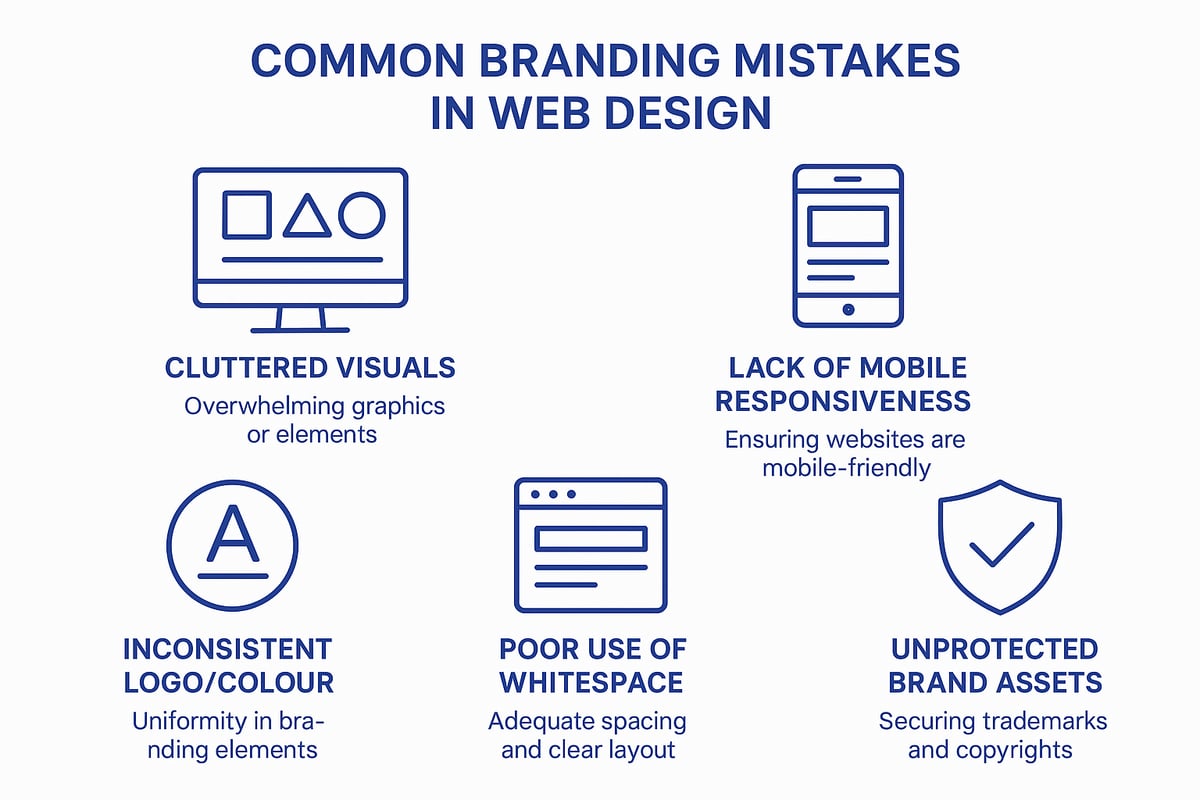
Below, we break down five frequent mistakes and how to avoid them for a more effective and memorable web design branding approach.
Overcomplicating Visuals and Messaging
Simplicity is a hallmark of effective web design branding. Brands often clutter their websites with too many colours, fonts, and graphical elements. This overwhelms visitors and dilutes the core message.
- Too many design elements distract from your brand’s value.
- Overly complex messaging confuses your audience.
- Busy layouts can increase bounce rates and reduce conversions.
Embracing minimalist principles not only enhances user experience but also strengthens brand recall. According to Minimalist designs improve website performance, removing unnecessary elements leads to faster load times and clearer communication.
Ignoring Mobile Responsiveness
A significant portion of web traffic comes from mobile devices. Overlooking mobile optimisation is a costly web design branding mistake.
- Non-responsive sites frustrate users and lead to higher abandonment rates.
- Inconsistent experiences across devices erode trust.
- Mobile users expect fast, seamless navigation and readable content.
Ensuring your site is fully responsive protects your brand’s reputation and ensures accessibility for every visitor. Test your site regularly on different devices to maintain a consistent standard.
Inconsistent Logo and Colour Usage
Consistency is the backbone of web design branding. Using different logo versions, mismatched colours, or varying styles across pages weakens your brand identity.
- Logos should be used in a uniform way, maintaining size and placement.
- Stick to your primary colour palette to reinforce recognition.
- Avoid introducing new colours that do not align with brand guidelines.
Maintaining consistent branding ensures visual harmony and helps visitors instantly recognise your business, no matter where they land on your site.
Neglecting Whitespace and Readability
Whitespace is not wasted space—it is a fundamental part of web design branding. Crowded layouts and small text make it hard for users to focus or engage.
- Adequate spacing highlights important content and guides the eye.
- Readable fonts and clear hierarchy improve comprehension.
- Overcrowding increases bounce rates and diminishes professionalism.
Prioritise clean layouts and legible typography to enhance both usability and the perceived credibility of your brand.
Failing to Protect Brand Assets
Your brand assets—logos, images, and unique visuals—are valuable. Failing to safeguard them can result in unauthorised use or brand dilution.
- Watermark key images or use subtle branding elements in graphics.
- Monitor online channels for misuse of your assets.
- Incorporate brand marks naturally within website media.
Proactive protection of your web design branding assets sends a clear message about your professionalism and attention to detail.
Future-Proofing Your Web Design Branding Strategy
Staying ahead in web design branding means anticipating shifts in technology, user behaviour, and competitive landscapes. Brands that adapt quickly can maintain relevance and authority online. To future-proof your web design branding strategy, focus on evolving with user expectations, embracing innovative platforms, conducting regular audits, and fostering a culture of agility within your team.
Adapting to Evolving User Expectations
User preferences and behaviours shift rapidly. To keep your web design branding effective, regularly monitor what your audience values most. Analyse competitor websites to see how they address changing trends, and draw inspiration while maintaining your unique identity. Invest in ongoing education for your team to stay informed about current best practices in design, accessibility, and usability.
By aligning your web design branding with evolving expectations, you not only attract new users but also retain existing ones. This proactive approach positions your brand as forward-thinking, which builds loyalty and trust over time.
Embracing New Technologies and Platforms
Innovative technologies are transforming how brands connect with audiences. Make sure your web design branding is ready for emerging platforms like social media, augmented reality, and voice search. Prepare branding assets that scale seamlessly across these channels, ensuring consistency and recognisability.
Leveraging advancements such as AI can further personalise user experiences and enhance engagement. For practical insights, discover how AI enhances user experience in web design. Staying open to new tech ensures your web design branding remains competitive and adaptable.
Regular Brand Audits and Refreshes
A static website can quickly become outdated, both visually and in messaging. Schedule regular brand audits to review every aspect of your web design branding. Evaluate visuals, content, and user flows to identify areas needing updates.
Refreshing your brand ensures alignment with business growth and market trends. This might include updating your logo, revising colour schemes, or refining your voice. Brands that routinely refresh their digital presence remain relevant and top-of-mind for consumers, reinforcing lasting credibility.
Building an Agile Brand Culture
An agile brand culture empowers your team to respond quickly to market changes. Encourage open feedback, innovation, and experimentation in web design branding projects. Use data-driven insights to guide pivots in strategy when needed.
Document your branding standards, but remain flexible enough to evolve. For more on this, explore actionable steps for establishing a unique brand. By fostering agility, your web design branding can withstand disruptions and seize new opportunities as they arise.
You’ve seen how strategic web design and branding can shape your business identity, drive trust, and set you apart in a digital-first world. Whether you’re ready to refresh your current site or build a new brand from the ground up, every tip in this guide is designed to help you make smarter choices for long term growth. If you’re looking for expert guidance to turn these insights into real results, let’s take the next step together—Start your project and discover what tailored, impactful design can do for your business.