Table Of Contents
In 2026, branding moves faster than ever, making logos essential for business recognition and trust. As markets shift and digital platforms evolve, companies must adapt to stand out.
Staying ahead with new logo design ideas is no longer optional, it is a core strategy for building a memorable brand. Forward-thinking businesses gain a clear edge by embracing innovation in their visual identity.
This article explores seven brilliant new logo design ideas, each offering actionable inspiration for businesses, designers, and marketers looking to lead in the next era of brand identity.
The Evolving Landscape of Logo Design in 2026
The world of branding in 2026 is more dynamic than ever. The pressure to innovate is intense, and businesses are constantly seeking new logo design ideas to stand out. As digital environments evolve, so do the strategies behind visual identity. Brands can no longer rely on static or outdated logos if they wish to capture attention in an increasingly saturated market.

Technology is a major force reshaping the way brands approach new logo design ideas. Artificial intelligence and generative design tools are now commonplace, enabling designers to iterate and refine concepts rapidly. According to industry data, over 60 percent of agencies in Australia have adopted AI-assisted workflows for branding projects. These tools offer speed and unprecedented creative possibilities, allowing brands to test and evolve their logos with data-driven precision.
Consumer expectations have shifted significantly. Today’s audiences demand authenticity, uniqueness, and a sense of purpose from the brands they support. As a result, new logo design ideas often focus on storytelling and emotional resonance. Custom typography, human-touched elements, and culturally relevant motifs are gaining traction. Brands that embrace these values not only create memorable logos but also build trust with their audiences.
Adaptability is now a non-negotiable feature for modern logos. With the rise of digital-first branding, logos must perform seamlessly across websites, apps, social media, and even immersive platforms like AR and VR. Responsive identity systems and adaptive designs ensure consistent recognition, regardless of where or how the logo appears. This flexibility is essential for brands looking to remain relevant with each emerging channel.
Sustainability and ethical design are at the forefront of new logo design ideas. Businesses are increasingly opting for eco-conscious colour palettes, recycled materials, and responsible printing methods. This shift is driven by consumer demand for environmental stewardship. Brands that align their visual identity with sustainability values often enjoy higher loyalty and positive brand perception.
Many brands have successfully reinvented their logos to stay ahead of trends. For example, several leading companies have embraced minimalist geometry, motion graphics, or earthy tones to reflect evolving market demands. For those considering a refresh, exploring logo design solutions and trends can provide valuable insights into which directions are resonating in 2026.
However, keeping up with new logo design ideas is not without challenges. Outdated logos risk being overlooked in a crowded marketplace, while rapid changes require constant vigilance and adaptation. Design industry leaders highlight the importance of flexibility, creative risk-taking, and ongoing learning. As technology and culture continue to evolve, the future of logo design will reward those who are proactive and open to fresh inspiration.
7 Brilliant New Logo Design Ideas to Try in 2026
Staying competitive in 2026 means embracing innovation in every aspect of your brand. Nowhere is this more visible than in your logo. The following seven new logo design ideas are shaping the future of visual identity, offering inspiration and practical strategies for brands ready to stand out.
These trends reflect the intersection of technology, culture, and design, providing a roadmap for businesses, designers, and marketers to create memorable, future-proof logos.
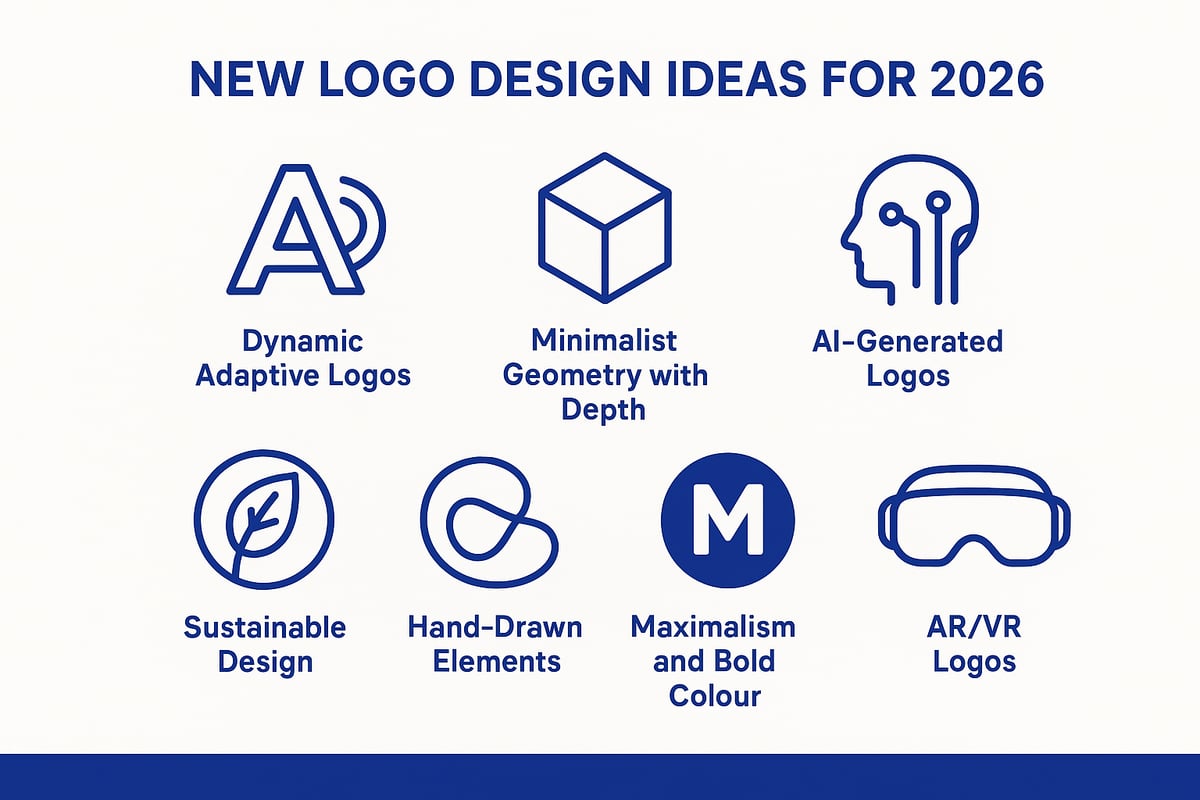
1. [Dynamic, Adaptive Logos]
Dynamic, adaptive logos are revolutionising brand identity in 2026. These logos are designed to shift, animate, or transform based on context, user interaction, or the platform where they appear. Unlike static logos, dynamic versions can adapt their colours, composition, or motion to suit specific digital environments, marketing campaigns, or audience segments.
Brands like Google and Spotify have pioneered this approach, using motion graphics and responsive identity systems that keep logos fresh and engaging. For example, a dynamic logo may animate upon app launch or change colour schemes for different product lines. This versatility can lead to higher consumer recall and engagement.
Technical implementation involves scalable vector formats and animation frameworks like SVG and Lottie. Designers must ensure adaptive logos remain recognisable across all touchpoints, from apps to print materials. Maintaining brand consistency is crucial; guidelines should define how and when adaptations occur.
Benefits of Dynamic, Adaptive Logos:
- Increased engagement through motion and interactivity.
- Enhanced memorability, as consumers recall unique logo variations.
- Versatility across digital, print, and emerging platforms.
Challenges:
- Higher production complexity and costs.
- Risk of diluting brand identity if adaptations are not carefully managed.
Ideal industries for dynamic logos include tech, entertainment, and e-commerce. As consumers expect more interactive brand experiences, incorporating new logo design ideas like adaptive logos can provide a significant edge in a crowded market.
2. [Minimalist Geometry with Depth]
Minimalist geometry with depth is redefining how brands approach simplicity in 2026. This trend combines clean geometric shapes with subtle gradients, shadows, and even 3D effects to create logos that are both modern and visually compelling. The result is a design that feels clear and sophisticated while still standing out in digital and physical spaces.
Brands such as Mastercard and Airbnb have updated their logos to embrace this style, merging minimalism with a tactile sense of dimension. The psychological impact is significant: minimalist geometry signals clarity, reliability, and trustworthiness to consumers. Recent surveys indicate that over 70 percent of consumers prefer minimalist logos for their perceived professionalism and ease of recognition.
To succeed with this trend, balance is key. Overcomplicating the design can undermine the very clarity that makes minimalism effective. Use gradients sparingly and ensure any added depth supports, rather than distracts from, the core brand message.
Tips for Designers:
- Prioritise clean lines and simple shapes.
- Use depth effects to highlight, not overwhelm, the logo.
- Test legibility at all sizes and on different backgrounds.
Pitfalls include losing brand personality or creating designs that do not scale well. Startups, fintech companies, and professional service brands are especially well-suited to this approach. For more on how depth and layering are shaping new logo design ideas, see Top Logo Design Trends in 2026.
3. [AI-Generated and Co-Created Logos]
AI-generated and co-created logos represent a seismic shift in the design process. In 2026, artificial intelligence tools are being used to generate, test, and evolve logos at unprecedented speed. These platforms analyse user data and design trends to create highly customised options, allowing brands to iterate rapidly and efficiently.
Brands like Nutella and Lexus have experimented with AI-assisted logo creation, using algorithms to explore countless variations and select those that resonate most with their audience. The main benefit is agility: AI can produce new logo design ideas in minutes, enabling businesses to respond quickly to market changes or feedback.
However, the role of human creativity remains vital. Designers must guide AI tools to ensure results align with brand values and messaging. Balancing machine input with human oversight helps maintain authenticity and originality.
Advantages:
- Speed and cost-effectiveness.
- Data-driven decision-making for design iterations.
- Unique, often unexpected outcomes.
Challenges:
- Questions around copyright and ownership.
- Concerns about brand control and authenticity.
Rapidly scaling businesses and startups benefit most from this trend, leveraging new logo design ideas to stay agile. As AI adoption grows in creative industries, expect even more hybrid, co-created identities to emerge.
4. [Sustainable and Eco-Conscious Logo Design]
Sustainability is now a core expectation for modern consumers, and logo design is no exception. Eco-conscious logos use earthy palettes, recycled materials, and environmentally friendly printing methods to communicate a brand’s commitment to the planet. Brands like Patagonia and The Body Shop have reinvented their identities to signal environmental responsibility, earning increased loyalty from like-minded consumers.
Research shows that 62 percent of consumers are more likely to support brands with visible sustainability efforts. Effective sustainable logos avoid clichés like generic leaves or globes. Instead, they employ subtle nature-inspired elements, organic shapes, and muted colours to convey their message authentically.
Design Strategies:
- Choose recycled or FSC-certified materials for print.
- Opt for digital-friendly palettes to reduce ink use.
- Use subtle, nature-inspired motifs rather than obvious symbols.
Potential Challenges:
- Risk of greenwashing if claims are not credible.
- Difficulty balancing sustainability with other brand values.
Food, retail, and environmental sectors benefit most from adopting sustainable new logo design ideas. Authenticity is key; consumers quickly spot insincerity, so brands must ensure their visual identity aligns with real-world practices.
5. [Hand-Drawn and Human-Touched Elements]
Hand-drawn and human-touched logos are experiencing a strong resurgence in 2026. These designs feature imperfect lines, organic textures, and artisan details, creating a sense of warmth and authenticity. Brands seeking to foster emotional connections are turning to this style to differentiate themselves in a digital world.
Boutique hotels, cafés, and creative studios are leveraging hand-drawn elements for storytelling and relatability. Data shows that consumers engage more deeply with handcrafted visuals, associating them with transparency and personal touch. The flexibility to blend hand-drawn features with digital refinement allows for scalability while preserving the unique character.
Tips for Blending Hand-Drawn and Digital:
- Digitise initial sketches for consistency.
- Use vector tracing to maintain resolution across platforms.
- Pair with clean typography for balance.
Scalability can be a concern, especially for small brands with limited resources. However, when executed well, hand-drawn new logo design ideas offer a compelling route to building memorable, human-centric brands.
6. [Maximalism and Bold Colour Play]
Maximalism and bold colour play are making waves as brands reject restraint in favour of vibrancy and expressive design. In 2026, this trend means layered logos, unexpected colour combinations, and dynamic compositions that grab attention instantly. Brands in fashion, entertainment, and youth-oriented markets are leading the way with this unapologetically bold approach.
Research in colour theory shows that bold palettes evoke energy, excitement, and memorability. However, the challenge is to balance impact with coherence. Overly complex designs can confuse audiences or dilute the brand’s core message.
Best Practices:
- Limit the palette to a few bold hues for consistency.
- Use layering to create depth without clutter.
- Ensure accessibility by testing contrast and legibility.
Maximalist new logo design ideas work best for brands seeking to disrupt the status quo. Careful curation is essential to avoid visual overload while still achieving a standout effect.
7. [Logos Designed for Immersive Experiences (AR/VR)]
The rise of AR and VR has prompted brands to rethink logos as 3D, interactive assets. In 2026, logos must be designed for immersive environments, where users can engage with them from multiple angles and even interact with animated elements. Tech and gaming companies are pioneering AR/VR-ready logos, using them in virtual product launches and experiential marketing campaigns.
Technical requirements include high-resolution, scalable assets and animation-ready formats like GLTF or FBX. Designers must ensure logos remain recognisable across both traditional and immersive platforms, maintaining brand consistency.
Benefits:
- Future-proofing brand identity.
- Deeper consumer engagement through interactive storytelling.
- Enhanced memorability in digital-first experiences.
Statistics indicate that brands using immersive new logo design ideas see higher engagement rates and longer brand recall. As AR/VR adoption accelerates, investing in cross-platform logo adaptability is becoming a necessity, not just a trend.
How to Choose the Right Logo Design Idea for Your Brand
Selecting the right approach from the many new logo design ideas available in 2026 is a pivotal decision for any business. The process involves more than just picking a style that looks appealing. It requires aligning your logo direction with your core brand identity, target audience, and strategic goals.
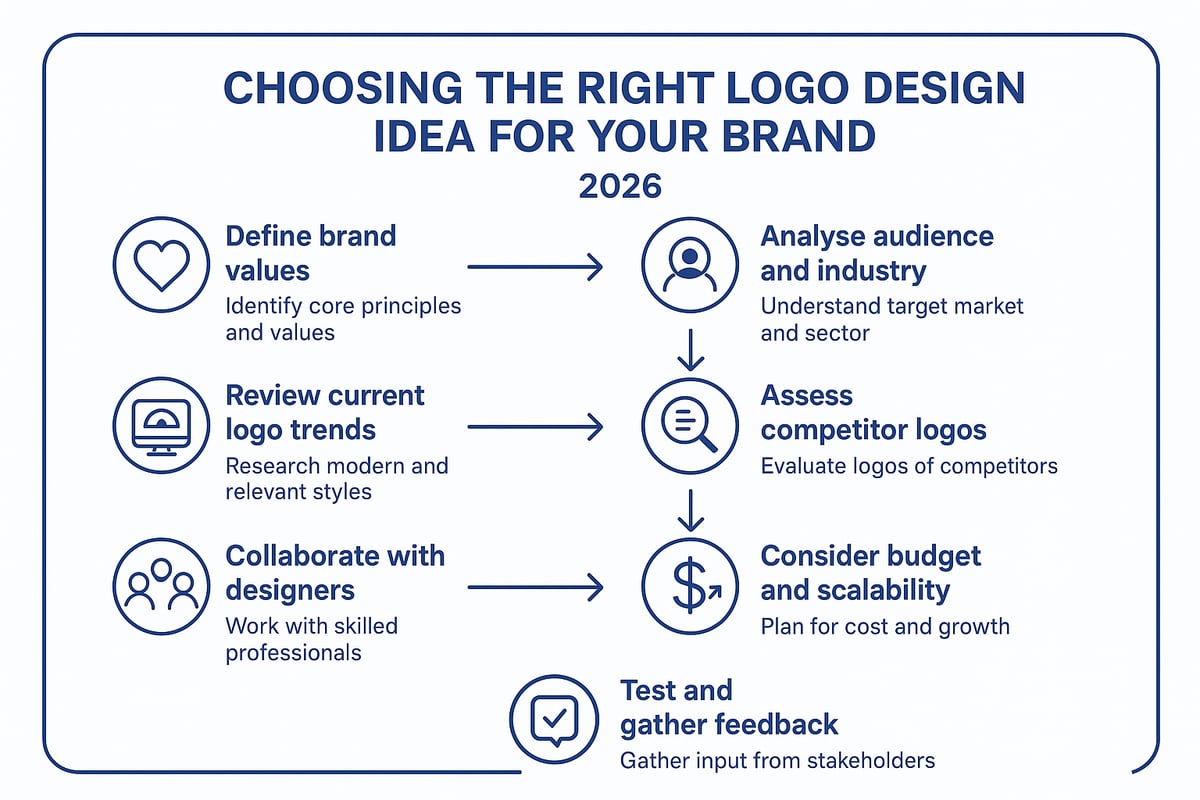
Step-by-Step Evaluation Process
Begin by clarifying your brand’s mission, values, and vision. This foundational step ensures that any new logo design ideas you consider will genuinely reflect your business’s ethos. Next, identify your target audience and the industry context in which you compete. Are you aiming for a youthful demographic or a professional audience? Understanding these factors narrows your choices and increases the effectiveness of your branding.
- Define your brand’s unique attributes and voice.
- List your primary and secondary target markets.
- Research industry-specific colour and style preferences.
By following these steps, you create a strategic filter for evaluating the latest new logo design ideas.
Aligning with Brand Values and Market Context
A logo is more than a visual mark—it is an ambassador for your brand. Ensure that any new logo design ideas resonate with your company’s core values and long-term positioning. For instance, a sustainability-focused brand might favour earthy tones and organic forms, while an innovative tech firm could opt for dynamic or AI-generated visuals.
Consult resources like brand identity and logo design to better understand how logo concepts integrate with broader brand strategies. This alignment builds trust and recognition, setting your business apart in a crowded marketplace.
Competitor Analysis and Market Differentiation
Analysing competitor logos is crucial when evaluating new logo design ideas. Identify patterns in your industry, noting what works and what feels overused. The goal is to ensure your logo stands out while remaining relevant.
Consider compiling a table to compare key features:
| Brand | Logo Style | Colour Palette | Uniqueness Score |
|---|---|---|---|
| Your Brand | To Be Decided | To Be Decided | To Be Decided |
| Competitor A | Minimalist Geometry | Blue, White | 7/10 |
| Competitor B | Adaptive, Dynamic | Red, Black | 8/10 |
This analysis provides a strategic overview and highlights opportunities for differentiation with new logo design ideas.
Working with Designers and Practical Considerations
Collaborating with experienced designers or agencies ensures your chosen new logo design ideas are realised professionally. Share your brand guidelines, market insights, and preferred trends with your creative partners. Open communication results in a logo that is both innovative and true to your brand.
Factor in your budget, timeline, and the need for scalability across platforms. Some logo trends, such as dynamic or AR/VR-ready logos, may require more resources than traditional designs. Review leading Logo Design Trends: Top 9 Design Trends for 2026 to stay informed on what is achievable within your constraints.
Testing, Feedback, and Launch
Before finalising your logo, test it with key stakeholders and a sample of your audience. Gather feedback on clarity, emotional impact, and recognisability. Make adjustments as needed to ensure your new logo design ideas are both effective and memorable.
This iterative approach helps avoid costly missteps and increases the likelihood of a successful rebrand. Testing also reveals how your logo performs across digital, print, and emerging platforms, ensuring adaptability for years to come.
Logo Design Best Practices for 2026 and Beyond
Staying competitive in 2026 means adopting new logo design ideas that work seamlessly across every platform and resonate with modern audiences. The best practices outlined below will help you create logos that remain relevant and effective as branding continues to evolve.

Flexibility & Adaptability
Ensure your logo adapts easily to different sizes, backgrounds, and media types. Responsive designs, scalable vector formats, and motion graphics help logos shine on everything from digital screens to print, and even AR or VR environments.
Clarity & Emotional Impact
Prioritise clear shapes, legible typography, and simple forms. A logo should be instantly recognisable at a glance. Infuse your brand’s personality to forge a strong emotional connection with your audience.
Inclusivity & Accessibility
Design with accessibility in mind. Use colour contrast for readability, select fonts that are easy to decipher, and avoid overly complex graphics. An inclusive logo ensures your brand is approachable to everyone.
Consistency & Future-Proofing
Maintain visual consistency across all brand assets. As industry standards shift, regularly review your logo for relevance. Explore 7 Logo Design Trends Dominating 2026 for insights on staying ahead of the curve.
| Best Practice | Key Focus | Benefit |
|---|---|---|
| Flexibility | Adaptability | Works on any platform |
| Clarity | Simplicity, recognition | Instant brand recall |
| Emotional Impact | Brand personality | Builds audience connection |
| Inclusivity | Accessibility | Reaches wider demographics |
| Consistency | Cohesion, review | Long-term brand strength |
Incorporating these new logo design ideas will set your brand up for success, ensuring your visual identity remains memorable and effective. For expert guidance on bringing your vision to life, consider exploring our graphic design services overview.
As we’ve explored, staying ahead of logo trends in 2026 means embracing adaptability, authenticity, and the latest design innovations. Whether you’re ready to experiment with dynamic logos, sustainable branding, or immersive digital experiences, having an expert by your side can make all the difference. If you’re inspired to elevate your brand and want a logo that truly sets you apart, I’d love to help you bring your vision to life. Let’s discuss how we can create a standout identity tailored to your goals—Start your project today.