Table Of Contents
Online marketing and web design are evolving at lightning speed, and brands that fail to adapt risk being left behind in 2026.
Did you know that over 85% of consumers judge a business’s credibility based on its website? This means first impressions matter more than ever.
By integrating strategic online marketing web design, brands can boost visibility, drive deeper engagement, and ultimately increase revenue.
This guide offers a clear, step-by-step approach to mastering online marketing web design for 2026, covering everything from digital branding foundations to future-proofing strategies.
Discover the latest trends, learn how to create seamless user experiences, and find out which marketing tools will help you stay ahead in a competitive marketplace.
Laying the Foundations: Digital Branding in the Modern Era
In 2026, establishing a strong digital brand is essential for any business competing online. The relationship between online marketing web design and branding has never been more critical. A cohesive strategy not only captures attention but also builds the trust needed to convert visitors into loyal customers.

Defining Your Brand Identity for 2026
A unique brand identity is the backbone of effective online marketing web design in today's crowded digital landscape. Your brand's mission, vision, and values must be crystal clear, guiding every decision and touchpoint. These elements, combined with a compelling unique selling proposition, help you stand out in a field of competitors.
Key elements of a strong brand identity:
- Mission statement that inspires trust
- Vision that drives long-term goals
- Core values that resonate with your audience
- Unique selling proposition that differentiates you
Consistent visual branding, from logo to colour palette, ensures your message is memorable. In 2025, several prominent companies refreshed their brands, resulting in significant market share gains. Data shows that brands with consistent branding see a 23% increase in revenue (Lucidpress).
However, inconsistent branding can leave customers confused, weakening trust and reducing engagement. A clear, unified identity lays the groundwork for every aspect of your online marketing web design strategy.
Aligning Web Design with Brand Strategy
Translating your brand identity into your website's look and feel is essential for success in online marketing web design. Every detail, from colours to typography, should reflect your core message and values. A site that mirrors your brand story is more likely to engage and convert visitors.
Consider a business that updated its site to align with a refreshed brand strategy. By focusing on consistent messaging and design, they saw a marked improvement in conversions. Visual elements such as colour schemes and imagery influence how users perceive your brand, shaping their first impressions.
Using generic templates may seem convenient, but it often undermines your brand authority and leaves your business looking forgettable. For more practical insights on harmonising branding and web presence, explore Web Design and Branding Insights. A tailored approach to online marketing web design is always more effective than a one-size-fits-all solution.
Building Trust and Authority Online
Building trust is a cornerstone of effective online marketing web design. Elements like customer testimonials, case studies, and transparent communication foster credibility and connection with your audience.
Social proof is increasingly important. Displaying trust badges, review scores, and client stories reassures visitors they are making a safe choice. Brands that actively leverage positive reviews often see a spike in conversions and brand loyalty.
According to Nielsen, 92% of consumers trust earned media, such as recommendations from friends and family, above other forms of advertising. This data highlights the value of authentic social proof in digital branding. By prioritising trust-building elements in your online marketing web design, you position your business as a credible and authoritative leader in your field.
Web Design Trends for 2026: What’s New and What Works
The landscape of online marketing web design is evolving rapidly as 2026 approaches. Brands that want to stand out must embrace new creative directions, elevate user experience, and adopt forward-thinking practices. This section explores the most influential trends shaping online marketing web design, offering clear strategies to help your brand stay ahead in a competitive digital world.

Embracing Advanced Visuals and Micro-Interactions
Online marketing web design is set to become even more immersive in 2026. Brands are moving beyond static visuals, integrating 3D graphics and AR/VR elements to create memorable digital experiences. Micro-interactions, such as animated buttons or subtle hover effects, capture user attention and make navigation feel intuitive.
For example, leading e-commerce platforms now offer AR-powered virtual try-ons, allowing customers to interact with products as if they were in-store. This not only increases engagement but also builds trust and reduces returns. According to industry data, sites using interactive elements see a 30% higher average session duration.
To stay ahead, brands should explore new creative directions, including organic shapes and anti-grid layouts. For more inspiration, see Web Design Trends 2026. These trends are shaping how online marketing web design can captivate and convert audiences.
Mobile-First and Responsive Design Evolution
Mobile devices now account for over 60% of all web traffic. As a result, mobile-first thinking is not just a recommendation, it is a necessity for online marketing web design. In 2026, users expect seamless experiences no matter which device they use.
New standards in mobile UX focus on speed, clarity, and touch-friendly interfaces. Responsive design has become a baseline, ensuring content adapts smoothly to different screens and orientations. However, what truly sets brands apart is the attention to detail, such as optimising tap targets and streamlining navigation for mobile users.
Ignoring mobile-first principles can lead to lost opportunities and higher bounce rates. Brands that invest in advanced responsive techniques are better positioned to engage audiences and drive results.
Accessibility and Inclusive Design
Accessibility is no longer optional for online marketing web design. With WCAG 3.0 updates and growing legal requirements, inclusive design is both an ethical responsibility and a smart business move.
Brands must ensure their websites are usable by everyone, regardless of ability. This includes providing alt text for images, maintaining high colour contrast, and supporting keyboard navigation. Tools like screen readers and accessibility testing platforms make compliance easier than ever.
Not only does accessible design protect against legal risk, it also opens your brand to a wider audience. Companies praised for inclusivity see stronger brand loyalty and reputation. Prioritising accessibility in online marketing web design demonstrates a commitment to all users.
Sustainability in Web Design
Sustainability has emerged as a key consideration in online marketing web design. Every website visit consumes energy, contributing to a digital carbon footprint. In 2026, brands are expected to adopt eco-friendly practices as part of their digital strategy.
This includes green hosting solutions, optimised images, and efficient code to minimise resource use. A typical website produces 1.76g of CO2 per page view, but conscious design choices can significantly reduce this impact.
Eco-friendly web design not only benefits the environment, it enhances brand reputation and can improve SEO rankings. As consumers become more environmentally aware, showcasing sustainable credentials in your online marketing web design can be a powerful differentiator.
User Experience (UX) & Conversion Optimisation: Turning Visitors into Loyal Customers
User experience is the backbone of successful online marketing web design. A seamless UX not only draws visitors in but also guides them towards meaningful actions. In today’s digital environment, brands must craft every website interaction to be intuitive, engaging, and conversion-focused.

The Psychology of UX in 2026
Understanding user psychology is essential for effective online marketing web design. Cognitive biases, such as the anchoring effect and loss aversion, shape how users interact with web elements. For instance, users are more likely to follow clear, prominent calls to action if they are placed where attention naturally flows.
Intuitive navigation is key. A well-structured site menu and logical information hierarchy reduce cognitive load, making it easier for visitors to find what they need. A/B testing remains a powerful strategy. Brands that tested different navigation styles in 2025 saw a 15 percent increase in conversions, highlighting the impact of subtle UX changes.
When planning online marketing web design, always consider the user’s mental shortcuts. Use visuals, colour, and layout to guide decisions and foster trust.
Speed, Performance, and Core Web Vitals
Site speed is a non-negotiable factor in online marketing web design. Google’s Core Web Vitals are now central to both SEO and user retention. Metrics like Largest Contentful Paint (LCP), First Input Delay (FID), and Cumulative Layout Shift (CLS) influence both search rankings and visitor satisfaction.
Here are key strategies for optimising site speed:
| Optimisation Tactic | Impact on Performance |
|---|---|
| Image compression | Faster load times |
| Lazy loading | Reduced initial load |
| Content Delivery Network | Improved global speed |
A one-second delay in page load can reduce conversions by 7 percent. Prioritising performance in online marketing web design ensures users stay engaged and are more likely to convert.
Personalisation and Dynamic Content
AI-driven personalisation is redefining online marketing web design in 2026. Modern websites adapt content, product recommendations, and messaging based on visitor behaviour and preferences. This creates a tailored experience that keeps users engaged.
Retail brands implementing AI personalisation have seen notable increases in average order value. Dynamic content also respects privacy regulations by allowing users to control their data preferences. Cookies and consent banners are now standard features, balancing personalisation with trust.
Incorporating personalised elements into online marketing web design helps brands stand out, delivering content that resonates and encourages action.
Conversion-Focused Design Elements
Conversion optimisation lies at the heart of online marketing web design. The placement and design of calls to action, forms, and lead magnets significantly affect user behaviour. Effective CTAs are visible, action-oriented, and supported by trust-building elements.
Consider these proven conversion boosters:
- Well-positioned testimonials
- Social proof like user reviews
- Urgency triggers such as limited-time offers
A case study from 2025 showed that redesigning a landing page with improved CTAs and social proof resulted in a 200 percent increase in sign-ups. Every detail in online marketing web design should be geared towards moving visitors down the funnel.
Measuring and Iterating UX
Continuous improvement is critical for online marketing web design success. Key UX metrics, such as bounce rate, session duration, and conversion rate, offer actionable insights. User testing tools and heat maps reveal how visitors interact with your site, highlighting areas for refinement.
Ongoing optimisation, including A/B testing and regular reviews, ensures your site evolves with user expectations. For a deeper dive into effective UX and marketing strategies, explore UX and Marketing Strategies.
By consistently measuring and iterating, brands can maintain a competitive edge and turn visitors into loyal customers through superior online marketing web design.
Integrating Online Marketing Tools & Automation for Seamless Growth
Staying competitive in 2026 requires businesses to move beyond basic web presence. Today, integrating the right tools and automation into your online marketing web design is essential for seamless growth. Brands must leverage technology to streamline processes, deliver personalised experiences, and scale efficiently.
The Modern Marketing Stack: Essentials for 2026
A robust online marketing web design strategy begins with a modern marketing stack. In 2026, essential tools include CRM systems for managing customer data, email marketing platforms for outreach, analytics to track performance, social media scheduling tools, and chatbots for instant engagement.
For example, integrating a CRM with your website’s forms allows automatic lead capture and nurturing. This ensures all customer interactions are tracked and followed up, supporting consistent brand messaging. By embedding these tools directly into your online marketing web design, you can centralise data and create a unified customer journey.
Automation for Efficiency and Scale
Automation is transforming how brands approach online marketing web design. By automating repetitive marketing tasks, businesses save time and reduce errors. Automated email workflows, for instance, can nurture leads from initial contact to conversion, maintaining engagement without manual intervention.
Data shows businesses using marketing automation see a 451% increase in qualified leads (APSIS). Automated chatbots can answer FAQs and gather customer information around the clock. Integrating automation within your online marketing web design frees your team to focus on strategy and creative growth.
Leveraging AI for Smarter Marketing
Artificial intelligence is a game-changer for online marketing web design. AI-powered chatbots provide instant support, while AI-driven content personalisation tailors website experiences to individual users. Predictive analytics help forecast customer behaviour, enabling proactive marketing.
E-commerce brands are already using AI to reduce cart abandonment and boost sales. With AI, your online marketing web design can adapt in real time, presenting users with relevant products and recommendations. This level of personalisation increases engagement and drives higher conversions.
Seamless Integration with E-commerce and Lead Generation
Connecting your online marketing web design with e-commerce platforms like Shopify or WooCommerce streamlines product management and checkout processes. Integrating lead capture tools and sales funnels ensures that every visitor is a potential customer.
A seamless experience, from browsing to purchase, is critical for growth in 2026. Fragmented systems lead to lost leads and inconsistent branding. By unifying e-commerce and marketing tools within your online marketing web design, you maximise efficiency and create a frictionless customer journey.
Cam Gomersall Design: Holistic Web Design & Branding Solutions
Cam Gomersall Design specialises in integrating online marketing web design, branding, and digital strategy into a cohesive solution. Their one-stop approach streamlines branding, web development, and ongoing marketing support for businesses.
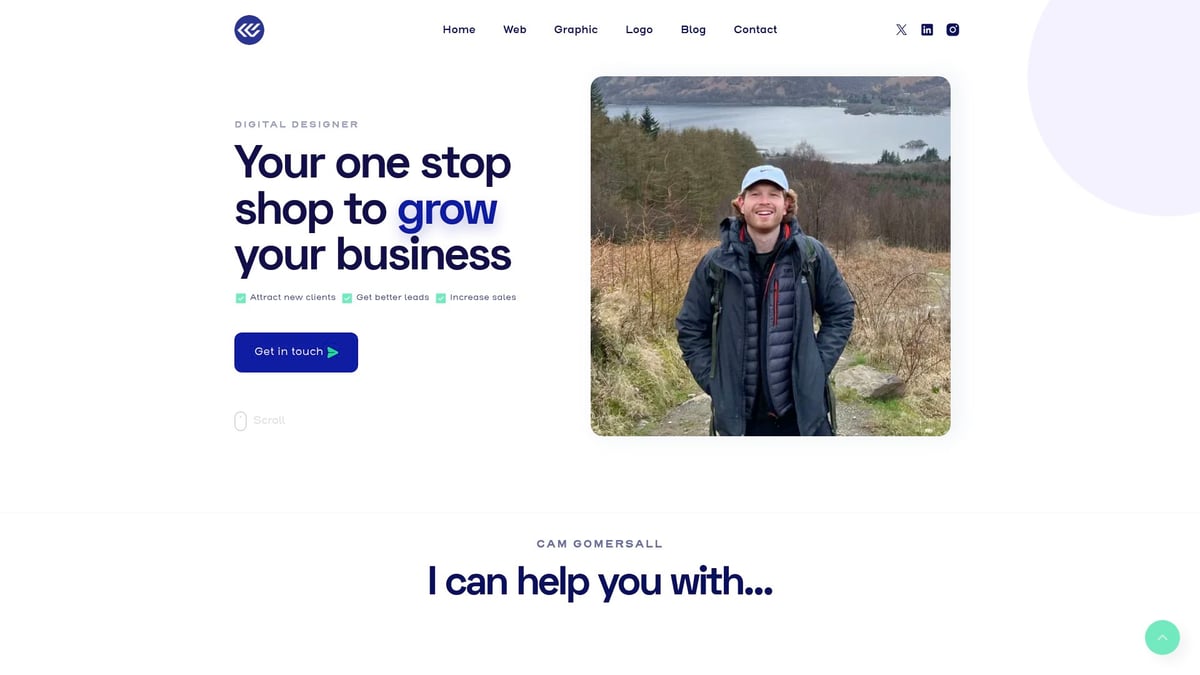
Real-world examples show how tailored, end-to-end services help SMEs and startups achieve measurable growth and a stronger online presence. By leveraging Website Design and Marketing Services, companies can access expert guidance on integrating essential marketing tools with custom web design. Explore further resources and consultation options to future-proof your brand in 2026.
Future-Proofing Your Website: Security, Scalability, and Analytics
In 2026, future-proofing your online marketing web design means more than just keeping up with trends. It requires a proactive approach to security, scalability, and analytics. As digital threats and consumer expectations evolve, your website must be ready to adapt, protect, and grow. Let’s explore the steps every brand should prioritise.
Website Security in 2026
The online marketing web design landscape faces sophisticated cyber threats in 2026. Attackers are using AI-driven techniques, making phishing and data breaches more common. Small businesses are especially at risk, as 43% of cyber attacks target them, according to Verizon DBIR.
To safeguard your site, implement these key protocols:
| Security Protocol | Purpose |
|---|---|
| SSL Encryption | Secures data transmission |
| Regular Software Updates | Fixes vulnerabilities |
| Two-Factor Authentication | Adds login protection |
| Daily Backups | Enables rapid recovery |
High-profile breaches in recent years highlight the danger of neglecting these basics. Transparent communication about your security measures also builds visitor trust.
Scalability and Performance Optimisation
A future-ready online marketing web design must handle growth and sudden traffic spikes. Planning for scalability is essential, especially for e-commerce or campaign-driven businesses.
Modern solutions include:
- Cloud hosting for flexible resources
- Content Delivery Networks (CDN) to speed up global access
- Modular design, allowing easy updates and feature expansion
For example, e-commerce sites that use scalable hosting avoid downtime during seasonal peaks, ensuring customers always have a smooth experience. Prioritising performance and scalability not only supports growth but also helps maintain a positive brand reputation.
Advanced Analytics for Smarter Decisions
Data-driven insights are the backbone of effective online marketing web design. Setting up Google Analytics 4 allows you to track user behaviour, marketing performance, and UX metrics in real time.
Key metrics include:
- Bounce rate
- Session duration
- Conversion rate
Combining analytics with user testing tools reveals where visitors drop off and what drives conversions. Making informed design and marketing decisions becomes much easier when you have clear, actionable data. For more on aligning analytics with design, see SEO and Design Best Practices.
Staying Ahead: Continuous Learning and Adaptation
The world of online marketing web design never stands still. To keep your site future-proof, stay updated on web standards, SEO changes, and digital marketing innovations.
Consider these resources:
- Industry blogs and newsletters
- Online webinars and workshops
- Professional certifications
Adaptability is your most valuable asset. Brands that encourage ongoing learning and swift adaptation are best positioned to thrive, whatever the digital landscape brings.
With online marketing and web design evolving so quickly, it’s more important than ever to make sure your brand stands out and adapts for success in 2026. You’ve just explored key insights on building a strong digital brand, embracing the latest web trends, and integrating smart marketing tools for future growth. If you’re ready to turn these strategies into real results and want expert guidance tailored to your business, I’m here to help. Let’s work together to create a website and brand that truly elevate your business. Start your project