Table Of Contents
In 2026, standing out online is essential as competition intensifies and customer expectations rise. Your brand’s success can hinge on the first few seconds, making it crucial to create logo and website assets that truly capture attention.
A distinctive logo and engaging site are no longer optional; they are the backbone of your business credibility and digital growth. This guide will show you how to build a cohesive visual identity and online presence that attracts customers and drives measurable results.
Explore essential strategies, tools, and expert insights for branding, logo creation, website planning, design best practices, launching, and future-proofing your digital assets—all designed to help your business succeed.
Understanding Branding in 2026
In 2026, the way you create logo and website will shape how customers perceive your entire business. Branding goes far beyond just visuals. It is the complete story your business tells, both online and offline, in every interaction.

The Evolution of Branding: Beyond the Logo
Branding in 2026 is about creating a unified experience across all touchpoints. When you create logo and website, you are laying the foundation for how your business is recognised and remembered. A cohesive identity means your logo, colours, messaging, and values are consistent on your website, social media, packaging, and even customer service.
This shift is crucial because fragmented branding confuses customers and weakens trust. Modern consumers expect a seamless journey, whether they discover your business on Instagram, your website, or in person.
Key Trends Shaping Branding in 2026
Personalisation, authenticity, and adaptive design are driving branding forward. Customers want brands to reflect their values and offer tailored experiences. Authentic storytelling and transparency build trust, while adaptive design ensures your brand looks great on every device and channel.
In 2026, more businesses will use dynamic logos, flexible colour palettes, and interactive elements. Staying current with these trends is vital when you create logo and website, as it helps your brand remain relevant and engaging.
Top 2026 branding trends:
| Trend | Description |
|---|---|
| Personalisation | Customised experiences for each user |
| Authenticity | Honest, value-driven brand messaging |
| Adaptive Design | Responsive visuals for all platforms |
Consumer Expectations and the Power of Storytelling
After the digital acceleration of the 2020s, 87% of consumers now research brands online before making a purchase. When you create logo and website, remember that first impressions form instantly. People judge credibility, quality, and trust within seconds.
Storytelling is the secret weapon of leading brands. For example, an outdoor gear company might weave customer adventure stories into its site, strengthening its brand narrative. Your logo and website should both reinforce this story, connecting emotionally with visitors.
Data-Driven Branding and Avoiding Common Mistakes
Making decisions based on analytics is now standard practice. When you create logo and website, use data to test how your visuals, messaging, and layouts perform. Track engagement, bounce rates, and conversion metrics to refine your brand identity over time.
Common branding mistakes include inconsistent visuals, unclear messaging, and ignoring customer feedback. To avoid these, ensure your logo and website align with your brand strategy. For a deeper look at how identity and logo design work hand-in-hand, see this Brand identity and logo design guide.
Common mistakes and solutions:
| Mistake | Solution |
|---|---|
| Inconsistent visuals | Use a brand style guide |
| Weak storytelling | Craft a compelling brand story |
| Ignoring analytics | Regularly review data |
Case Study: Rebranding for Digital-First Success
Consider a local retailer who decided to create logo and website tailored for a digital audience. By updating their identity, website, and messaging, they saw a 40% increase in online engagement within six months. Their new brand story resonated with modern consumers, leading to measurable growth.
In 2026, branding is a holistic process. When you create logo and website, think beyond the visuals. Focus on cohesive identity, embrace trends, let data guide you, and always tell a story that connects. This approach ensures your brand stands out and thrives in a crowded marketplace.
Step 1: Creating a Logo that Resonates
A strong logo is the cornerstone when you want to create logo and website assets that truly represent your business. Your logo must connect with your audience, communicate your values, and set the stage for a cohesive digital presence. Let us break down the process step by step, ensuring your visual identity is ready for 2026.

Defining Your Brand’s Core Identity
The first step as you create logo and website elements is to clarify your brand’s core identity. Start by defining your mission, vision, and values. These shape the story your logo must tell and guide every design decision.
Identify your target audience. What do they care about? What visual styles resonate with them? Analysing your competitors will help you spot gaps and ensure your logo stands out in a crowded market.
For instance, a construction company that pivoted to eco-friendly building updated its logo to include green hues and organic shapes, signalling its new commitment. Use mood boards to collect inspiration and clarify your direction. Brand archetypes, such as “The Innovator” or “The Caregiver,” can help you align your logo with the personality you want to project.
By laying this groundwork, you ensure the logo you create is not just attractive but meaningful and strategic. This clarity will set the tone for your entire project as you create logo and website assets that speak directly to your audience.
Logo Design Principles for 2026
Designing a logo in 2026 demands a balance of timeless principles and awareness of current trends. Simplicity is crucial—your logo should be instantly recognisable, even at small sizes. Scalability and versatility are also key, ensuring your logo looks sharp across social media, merchandise, and digital screens.
This year, dynamic logos, subtle gradients, and even motion elements are trending. Accessibility is front of mind, so your logo must work across light and dark backgrounds, and be readable for everyone. Thoughtful colour psychology and font selection can significantly influence perception and recall.
Consider a brand that refreshed its logo using bold, legible fonts and a streamlined graphic. After the update, they saw a 40% boost in brand recall. For a detailed look at emerging trends, you may want to explore Logo design solutions and tips.
When you create logo and website assets with these principles, you build a foundation for brand recognition and trust.
Choosing the Right Tools and Resources
Selecting the right tools is essential when you create logo and website visuals. Popular design software includes Adobe Illustrator, Figma, and Canva, each offering unique benefits. AI-powered tools are reshaping the process, enabling faster drafts without sacrificing creativity.
Consider whether to design your logo yourself or hire a professional. DIY platforms are cost-effective and offer flexibility, but professionals bring deep expertise and can elevate your visual identity. In 2026, budgeting for a logo can range from a few hundred to several thousand dollars, depending on complexity and expertise.
- Compare your options:
- DIY: Affordable, flexible, but may lack polish
- Professional: Expert guidance, tailored results, higher cost
- Hybrid: Use AI tools, then consult a designer for refinement
Effective collaboration is vital. Share mood boards, give clear feedback, and stay involved throughout the process. When you create logo and website assets thoughtfully, you position your brand for long-term success.
Finalising and Protecting Your Logo
After design, test your logo with real users. Gather feedback from staff and customers to see how it performs in various contexts. Create logo variations for different uses, such as responsive layouts, monochrome applications, and icon-only versions.
Export your logo in multiple file formats (SVG, PNG, EPS) to ensure compatibility across digital and print platforms. Protect your investment by trademarking your logo, safeguarding your brand from imitation.
Plan a coordinated launch. Update your website, social media, and business materials simultaneously to maximise impact. A well-executed rollout helps you create logo and website assets that signal growth and professionalism to your audience.
Step 2: Planning Your Website for Maximum Impact
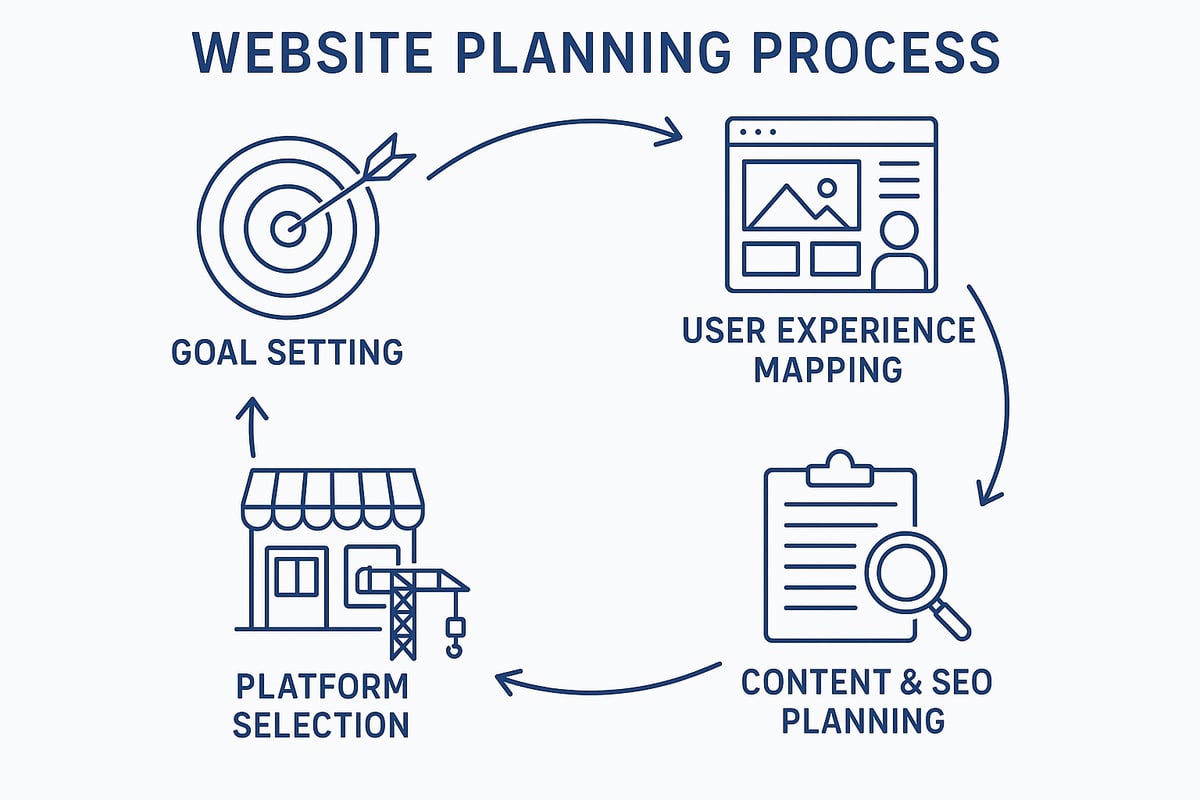
A strategic approach is essential when you create logo and website assets that truly deliver results. Planning your website with precision ensures your new brand identity doesn't just look good, but also functions as a powerful business tool. In this section, we break down the critical steps to help you set solid goals, map out user experience, develop a content strategy, and select the right technology for your future-proof website.
Setting Clear Website Goals
Before you create logo and website assets, define what your website should achieve. Are you aiming for lead generation, e-commerce sales, portfolio display, or educational content? Outlining these objectives helps align your digital presence with your overall business strategy.
Consider this example: A retail brand clarified its website's purpose, resulting in a 60 percent increase in online sales. Setting measurable goals, such as increasing newsletter signups or reducing customer support queries, provides focus and direction. Identify key performance indicators (KPIs) like conversion rate, average order value, and time on site to track your website’s impact.
By establishing clear intentions at the outset, you’ll ensure your website supports your business growth and maximises return on investment. This clarity is vital for every create logo and website project.
Mapping Out User Experience (UX)
User experience is the heartbeat of your digital presence. When you create logo and website elements, seamless UX design ensures visitors stay engaged and find what they need quickly. Start with intuitive navigation and clear call-to-actions that guide users toward your key goals.
Wireframing helps you visualise your website’s structure and flow before development begins. With 75 percent of web traffic now coming from mobile devices, a mobile-first approach is essential. Accessibility should also be a priority, making sure your site is usable for everyone, regardless of ability.
A hospitality business, for instance, saw higher booking rates after a UX overhaul focused on streamlined navigation and faster mobile load times. For more insights on cohesive site identity and experience, explore this Web design and branding guide.
Content Strategy and SEO Fundamentals
Compelling content is the backbone of any successful create logo and website initiative. Start by crafting copy that matches your brand voice and speaks directly to your audience. Plan your content hierarchy so important information is easy to find, and structure pages for logical flow.
Incorporate SEO best practices from the beginning. Use relevant keywords, write descriptive meta tags, and add alt text to images for better visibility in search engines. AI-powered tools can help generate and optimise content efficiently, saving time while maintaining quality.
A targeted content strategy led one business to a significant boost in web traffic and engagement. By focusing on both storytelling and optimisation, your website becomes a magnet for both users and search engines.
Choosing the Right Platform and Tech Stack
Selecting the right platform is a pivotal decision in your create logo and website journey. Compare popular builders like Webflow, Framer, Shopify, and WordPress to see which aligns with your needs. Consider scalability, ease of use, and integration capabilities.
Custom development offers flexibility but may require a larger budget and longer timelines. Templates, on the other hand, provide speed and affordability, though with limited customisation. Security and compliance should be front of mind, especially as privacy regulations evolve in 2026.
For example, an e-commerce brand migrated to a more scalable platform and unlocked rapid growth. Weigh the pros and cons carefully to future-proof your website and ensure it grows with your business.
Step 3: Designing and Building Your Website
Designing and building your website is where your vision comes to life. To create logo and website assets that truly represent your brand, it is essential to blend creativity, strategy, and technology. Each decision, from colour palette to technical stack, impacts how your audience perceives and interacts with your business.

Visual Design Best Practices
To create logo and website elements that resonate, align your site's visual identity with your brand's core. Start with your logo as the anchor for colour schemes, typography, and imagery. Consistency in these areas builds trust and recognition.
In 2026, web design trends are evolving rapidly. Micro-interactions, immersive 3D elements, and dark mode are not just aesthetics, they enhance user engagement. For inspiration, explore Web Design Trends 2026 to see how leading brands are innovating with AI-powered experiences and interactive visuals.
Balance creativity with usability. Use high-contrast colours for accessibility and select typefaces that reflect your brand personality. Ensure that your design scales well across devices, maintaining clarity and impact. Consider a portfolio website that won awards by combining bold visuals with intuitive navigation, proving that function and beauty can coexist when you create logo and website assets that work together.
Development Essentials: From Prototype to Launch
Turning your vision into a functional website requires a structured approach. Begin by translating wireframes into clickable prototypes, allowing stakeholders to review flow and layout before development. Responsive design is non-negotiable in 2026, as users expect seamless experiences on mobile, tablet, and desktop.
Integrate essential features such as contact forms, chatbots, and real-time analytics. These tools help you create logo and website solutions that drive engagement and provide valuable insights. Prioritise site speed and performance by optimising images, leveraging caching, and testing across browsers.
A business that invested in performance optimisation saw a 30 percent reduction in bounce rate. This improvement proves the value of thorough testing and refinement. When you create logo and website assets, remember that technical excellence is just as important as visual appeal for long-term success.
Integrating Branding Across All Touchpoints
Branding does not stop at your homepage. To create logo and website experiences that are cohesive, maintain consistency in logo usage, colour palette, and messaging across every page. Custom icons and illustrations reinforce your unique identity and make your site memorable.
Integrate social media and email sign-ups directly into your website to amplify your reach. Every customer interaction should reinforce your brand, from landing pages to automated emails. A SaaS company saw a measurable increase in customer trust after unifying branding across its digital platforms.
Thoughtful integration of branding at every touchpoint ensures that visitors recognise and remember you, making your efforts to create logo and website assets truly worthwhile.
Working with Professionals: When to Hire Experts
Sometimes, the best way to create logo and website solutions that stand out is to engage professional designers and developers. Experts bring technical knowledge, creativity, and a fresh perspective to complex projects.
When selecting a digital partner, review their portfolio, client testimonials, and industry experience. Budgeting for professional design and development may seem like a significant investment, but it often leads to faster growth and better results.
Consider the case of a startup that partnered with a web design agency. With expert support, they accelerated their launch and achieved rapid market traction. If your project requires advanced functionality or a highly polished look, hiring professionals can help you create logo and website solutions that deliver measurable business value.
Step 4: Launching and Promoting Your New Brand Assets
Launching your new brand identity is a pivotal moment. A well-executed rollout ensures your efforts to create logo and website truly resonate with your audience. Planning every detail helps you maximise engagement and avoid confusion.
Creating a Strategic Launch Plan
Begin by developing a detailed launch plan to synchronise your new logo and website reveal. Set a timeline, assign responsibilities, and ensure all stakeholders understand the process. Consider a phased approach, starting with internal communications before public announcements.
Include backup plans for technical hiccups or unexpected feedback. Refer to Website Redesign Best Practices to ensure your rollout is seamless and aligns with industry standards. This preparation helps your create logo and website project avoid common missteps and ensures a confident debut.
Updating Every Brand Touchpoint
The next step is updating all channels where your brand appears. Replace old logos and visuals across social media, email signatures, business cards, signage, packaging, and digital ads. Consistency is key to reinforcing your new identity.
Create a checklist to track progress. Assign team members to oversee specific touchpoints, reducing the risk of outdated branding lingering anywhere. This attention to detail supports your create logo and website initiative and enhances brand trust.
Announcing Your New Identity
Craft a compelling announcement strategy. Use PR releases, email campaigns, blog posts, and social media teasers to tell your brand story. Highlight the reasons behind your decision to create logo and website, and share the journey with your audience.
Leverage insights from Branding Trends 2026 to align your messaging with current expectations. Encourage your team and customers to share the news, building excitement and anticipation.
Leveraging Influencers and Brand Advocates
Expand your reach by engaging influencers and loyal customers. Provide them with exclusive previews or branded assets to share. Their authentic endorsements can amplify the impact of your create logo and website launch.
Offer incentives or host interactive online events to encourage participation. This grassroots approach often leads to organic growth and deeper brand loyalty during this critical transition.
Monitoring Feedback and Measuring Results
After launch, monitor feedback across all channels. Use surveys, social listening tools, and analytics platforms to gauge reactions. Brands that actively promote launches typically see three times higher engagement, so track metrics like website visits, social shares, and conversion rates.
Gather data to assess how well your create logo and website efforts are resonating. Be ready to make quick adjustments if concerns or confusion arise.
Common Pitfalls and a Real-World Example
Avoid pitfalls such as inconsistent updates, unclear communication, or neglecting to address customer questions. Prepare a FAQ and train your team to respond promptly.
A restaurant chain that recently decided to create logo and website saw a 25 percent increase in bookings after a coordinated launch. Their success stemmed from thorough planning, clear messaging, and proactive engagement with their audience.
A thoughtful launch sets the stage for long-term brand growth, making your create logo and website investment pay off immediately and in the years ahead.
Future-Proofing Your Logo and Website for 2026 and Beyond
Staying relevant online is a moving target. To create logo and website assets that last, adaptability is your most valuable tool. As digital trends and technologies accelerate, businesses must anticipate change, not just react to it. Building future-proof assets ensures your brand remains credible, competitive, and compelling in 2026 and beyond.
Why Adaptability is Essential
The digital landscape changes rapidly, making it crucial to create logo and website solutions that can evolve. Adaptability means your brand visuals and web experience are flexible enough to accommodate new trends, technologies, and user behaviours.
Take logo design, for example. Modern logos are built for versatility, easily adapting to different devices, screen sizes, and even dynamic or animated formats. Staying informed about the Logo Design Trends 2026 can guide your approach, helping you create assets that feel fresh, not dated, as the years progress.
Embracing Emerging Technologies
Technologies like artificial intelligence, augmented or virtual reality, and voice search are transforming how people interact with brands. To create logo and website assets that stand the test of time, consider how these tools can be integrated.
For example, AI can personalise website experiences or automate content updates. AR/VR features might allow users to visualise products or services in new ways. Voice search optimisation is also becoming essential, as more consumers use smart speakers and mobile assistants to find information.
Keeping Content and Features Fresh
A future-proof strategy means committing to regular updates. Brands that create logo and website assets with ongoing improvement in mind are positioned to stay ahead of the competition. Review your content, visuals, and functionality at least quarterly to ensure everything is relevant and engaging.
Use analytics to track user behaviour and gather feedback. This data-driven approach lets you identify what works, spot issues early, and experiment with new features that keep your audience interested.
Accessibility and Legal Compliance
In 2026, accessibility is no longer optional. With 68% of sites failing basic accessibility checks, ensuring everyone can interact with your brand online is both a legal and ethical necessity. When you create logo and website elements, prioritise readable fonts, high-contrast colours, descriptive alt text, and logical navigation.
Stay updated on legal requirements, including privacy regulations and industry-specific standards. Regular audits help you avoid costly compliance issues and demonstrate your commitment to all users.
Building a Brand Style Guide
Consistency is the backbone of a strong brand. Develop a comprehensive style guide that covers your logo usage, colour palette, typography, imagery, and tone of voice. This document is essential when you create logo and website assets, as it ensures every touchpoint reflects your brand identity.
A style guide streamlines onboarding for new team members or agencies and prevents inconsistencies as your business grows. Include responsive logo variants, approved graphics, and clear rules for applying your brand across digital and physical platforms.
Preparing for Global Growth
Scaling your business internationally brings new challenges. When you create logo and website assets, plan for multilingual content, regional design preferences, and localisation. Adapt your visuals and messaging to resonate with diverse audiences while maintaining brand coherence.
Consider the example of an e-commerce brand that expanded globally by investing in adaptive branding and a scalable web infrastructure. Their commitment to flexibility enabled smooth market entry and sustained growth across multiple regions.
Future-proofing is not a one-time task. By prioritising adaptability, embracing new technologies, maintaining accessibility, and building robust brand guidelines, you ensure your efforts to create logo and website assets continue to pay dividends as the digital world evolves.
As you’ve seen throughout this guide, building a strong logo and website is essential for making a memorable first impression and setting your business up for growth in 2026. By combining the right strategy, a distinctive visual identity, and a seamless digital experience, you can position your brand to stand out in a crowded marketplace. If you’re ready to take the next step and want expert guidance tailored to your goals, I’m here to help you bring your vision to life. Let’s work together to create a brand and website you’re proud of—Start your project.