Table Of Contents
A creative revolution is reshaping the world of tools logo design in 2026, where innovation seamlessly blends with brand identity. As businesses seek to stand out in a crowded digital space, the tools logo has become a focal point for expressing expertise, trust, and modern values.
This article dives into the top eight inspiring tools logo ideas and trends set to define the industry in 2026. You will discover how minimalist line art, 3D elements, eco-friendly motifs, and more are transforming the visual landscape.
Ready to refresh your brand's look? Explore bold predictions, see trend highlights, and gain actionable insights to elevate your tools logo and build a lasting impression.
The Evolving Landscape of Tools Logo Design
As we approach 2026, the tools logo landscape is undergoing rapid evolution. Brands are rethinking how they visually represent themselves in a digital-first world, aligning design with both technological advancements and shifting consumer values. Key trends such as adaptability, authenticity, sustainability, and automation are shaping the future of tools logo design.

The Impact of Digital Transformation on Logo Design
Digital transformation is fundamentally altering tools logo trends. Today, brands are prioritising scalable, responsive designs that look sharp across all platforms, from mobile apps to large-format displays. Many companies are updating their logos to vector formats, ensuring crispness and adaptability in digital environments.
For instance, several leading hardware brands have simplified their tools logo to work seamlessly as both an app icon and a website header. According to recent industry data, a growing number of businesses now select vector-based logos for their digital branding needs. For actionable strategies and examples, see this Logo design solutions guide.
This shift highlights that a flexible tools logo is no longer optional—it is essential for brands that want to remain relevant and recognisable in a fast-changing digital era.
Consumer Expectations and Industry Demands
Modern consumers expect more from a tools logo than just visual appeal. They seek authenticity, relatability, and a sense of trustworthiness. The influence of DIY culture and maker movements is evident in the rise of hand-drawn motifs and approachable symbols within the tools sector.
Successful brands are adapting by choosing logo elements that reflect reliability and community spirit. For example, a tools logo that incorporates a handshake or familiar tool shapes resonates strongly with audiences seeking trustworthy service. Surveys show that brands with clear, memorable logos enjoy higher consumer preference and engagement.
This evolution underlines the need for every tools logo to connect emotionally, not just visually, with its target market.
The Role of Sustainability and Social Values
Sustainability is now a leading driver in tools logo design. Companies are weaving eco-conscious themes into their branding, using green colour palettes, recycled motifs, and nature-inspired shapes to communicate environmental responsibility.
Competitor analysis reveals a surge in logos featuring leaves, renewable materials, and eco-icons, signalling a brand’s commitment to positive change. Industry data confirms a steady rise in eco-friendly branding across the tools sector, as consumers increasingly favour businesses with visible social values.
A tools logo that authentically incorporates sustainability can set a brand apart, but it must be genuine to avoid perceptions of greenwashing.
Technology, AI, and the Influence of Automation
Emerging technologies are unlocking new creative possibilities for the tools logo. AI-powered design tools enable rapid prototyping and experimentation, allowing brands to iterate faster than ever. Automation also supports the creation of dynamic logos with 3D, motion, and interactive elements.
In the tools industry, some brands are already using 3D or animated logos to enhance their digital presence, especially in AR or VR environments. These innovations not only future-proof a tools logo but also boost memorability and engagement.
Adapting to automation and new tech ensures that a tools logo remains effective and visually compelling as platforms and consumer habits evolve.
8 Inspiring Tools Logo Ideas & Trends for 2026
The tools logo landscape in 2026 is set for a transformative shift. From bold minimalism to immersive 3D effects, the trends highlighted here are reshaping how brands connect with their audiences. Explore how each idea can help your tools logo stand out, stay relevant, and drive brand loyalty.

1. Minimalist Line Art Logos
Minimalist line art has become a signature style for the modern tools logo. Clean, simple lines represent classic tools like wrenches, hammers, or toolboxes, creating a look that is both timeless and highly adaptable.
This trend thrives on versatility. A minimalist tools logo is easily scalable, retaining clarity on everything from business cards to website icons. Small businesses and startups benefit most, as these logos ensure instant recognition in both digital and print formats.
The popularity of line art logos is evident, with platforms like Freepik and Vecteezy reporting a notable surge in downloads. Brands such as local handyman services often use single-line icons to symbolise their expertise. This approach not only enhances brand recall but also aligns with consumer demand for uncluttered, memorable identities.
Minimalism, however, is not about being generic. The challenge is to balance simplicity with distinctiveness, ensuring your tools logo is instantly recognisable among competitors. For mobile apps and digital-first brands, this style is especially effective, providing a crisp and professional appearance.
| Benefit | Minimalist Line Art Logos |
|---|---|
| Scalability | Excellent |
| Recognition | High |
| Versatility | Strong |
When designing, focus on unique tool shapes or combinations that set your brand apart, keeping the tools logo both simple and distinctive.
2. 3D and Isometric Logo Designs
The evolution of the tools logo now includes stunning 3D and isometric effects. Brands are embracing depth, realism, and dynamic perspectives, using gradients, shadows, and layered elements to create logos that leap off the screen.
A 3D tools logo delivers powerful visual impact, especially for tech-focused tool brands and online marketplaces. These logos adapt well to digital branding, offering a modern look that stands out on apps and websites. For example, a 3D wrench or toolbox icon can instantly communicate innovation and technical expertise.
Statistics from popular design platforms show a marked increase in downloads of 3D tool icons and mockups. This reflects a broader move towards tactile, interactive branding. According to recent logo design trends for 2026, tactile effects and dynamic identities are set to dominate.
The memorability of a 3D tools logo is another core benefit. These designs are ideal for businesses seeking to convey modernity and forward-thinking values. When paired with animation or motion, the effect is even more engaging.
For best results, use gradients and shadowing carefully, ensuring your tools logo remains clear and functional at every size.
3. Eco-Friendly & Sustainable Motifs
Sustainability is now front and centre in tools logo design. Brands are weaving green elements like leaves, recycled materials, and nature-inspired shapes into their visual identities.
An eco-friendly tools logo signals environmental responsibility, appealing to consumers who prioritise modern values. Examples include tool brands incorporating plant motifs or earthy colour palettes, clearly communicating their commitment to sustainability.
Consumer preference for eco-conscious brands is growing rapidly. Data from industry research confirms that logos with sustainable motifs are more likely to attract environmentally aware customers. In a crowded market, this approach offers a clear differentiator.
However, authenticity is crucial. Audiences can spot greenwashing, so it is essential the eco aspects of your tools logo reflect real business practices. For brands in repair services or DIY, integrating recycled materials or energy-efficient imagery can build trust and credibility.
Use green as a primary or accent colour, and consider subtle nature icons that reinforce your message without overwhelming the design. For eco-friendly tool manufacturers, this trend is both timely and effective.
4. Vintage & Retro-Inspired Logos
Nostalgia continues to inspire tools logo design, with vintage and retro motifs making a strong comeback. Classic badge, seal, and emblem-style logos feature distressed textures, bold typography, and familiar imagery like crossed hammers or saw blades.
This style is particularly effective for carpentry, mechanical repair, and family-owned businesses. A vintage tools logo builds trust and signals heritage, connecting with audiences who value reliability and authentic craftsmanship.
Design platforms report high engagement for retro logo templates, indicating strong consumer interest. These logos evoke a sense of history and expertise, making them ideal for brands with a legacy or those wishing to convey established roots.
Key features include bold, easy-to-read typefaces and subtle aging effects. The appeal of a vintage tools logo lies in its ability to communicate both tradition and quality at a glance.
For niche toolmakers or established brands, retro styles offer a proven way to stand out while appealing to customers seeking durability and dependability.
5. Dynamic Motion and Animated Logos
Animation is bringing the tools logo to life like never before. Brands are now adding movement to their logos, such as spinning gears, swinging hammers, or animated toolboxes, to enhance digital engagement.
Motion logos use GIFs, SVG animations, and short videos, making them ideal for website headers, app splash screens, and social media. The adoption of animated logos in digital marketing has increased, reflecting a shift towards more interactive branding.
A dynamic tools logo draws attention and signals a tech-savvy, modern business. For online tool retailers and SaaS platforms, animation can set your brand apart from static competitors. Motion not only adds energy but also demonstrates innovation.
When designing an animated tools logo, keep motion smooth and purposeful. Overly complex animations can distract, so focus on reinforcing brand identity. This trend is especially effective for brands targeting younger audiences or those seeking to highlight their digital-first approach.
The future of tools logo design will see even greater integration of motion, offering endless creative possibilities for brand storytelling.
6. Abstract Geometric Shapes
Abstract geometric designs are redefining the tools logo, symbolising precision, innovation, and modernity. This trend features overlapping shapes, bold colour blocks, and stylised tool silhouettes that break away from literal representations.
Construction tech startups and engineering firms are at the forefront, using abstracted icons to suggest progress and creativity. The rise in geometric logo downloads for the tools sector highlights the growing appeal of this aesthetic.
An abstract tools logo is highly versatile, adapting easily to global markets and digital platforms. The use of geometry fosters curiosity and helps brands differentiate themselves in a competitive space.
Key benefits include a modern appearance and adaptability across various media. When designing, experiment with combining tool shapes into unexpected forms, ensuring the tools logo remains recognisable yet unique.
This style is perfect for innovative brands looking to position themselves as leaders in design and technology.
7. Personalised Monogram & Lettermark Logos
Personalisation is a rising trend in tools logo design, with brands integrating their initials into custom monograms or lettermarks. Subtle tool motifs, like a wrench forming part of a letter, add a distinctive touch.
A monogram tools logo is unique, memorable, and scalable for all branding needs. Handyman services and contractors often choose this style to convey professionalism and a bespoke feel.
The trend is supported by data showing increased demand for monogram logos among small businesses. The key is to balance creativity with legibility, ensuring the tools logo is both artistic and functional.
For freelancers and boutique tool brands, a personalised lettermark offers a competitive edge. It allows for brand individuality while maintaining a polished, cohesive appearance.
When designing, experiment with integrating tool elements into the lettering, always prioritising clarity and recognition.
8. Inclusive & Diverse Representation
Inclusivity is shaping the future of tools logo design. Brands are now incorporating diverse characters, hands, and communities, reflecting the varied audiences they serve.
Features such as multicultural imagery, gender-neutral icons, and collaborative motifs help a tools logo resonate with broader demographics. This approach is gaining traction, with increased demand for inclusive branding reported for 2026.
An inclusive tools logo builds trust and fosters brand loyalty. Community-focused brands and social enterprises benefit most, as these logos communicate openness and shared values.
Examples include tool brands featuring diverse workers or community repair themes within their logo design. This trend not only aligns with modern social values but also strengthens emotional connections with customers.
For large retailers and organisations, inclusivity in the tools logo is a strategic move, ensuring relevance and appeal in an increasingly diverse marketplace.
Colour Trends and Typography in Tools Logos
The tools logo landscape in 2026 is being shaped by bold colour choices and innovative typography. As brands compete for attention, mastering these visual elements is crucial for standing out and ensuring memorable brand recall.
Emerging Colour Palettes for 2026
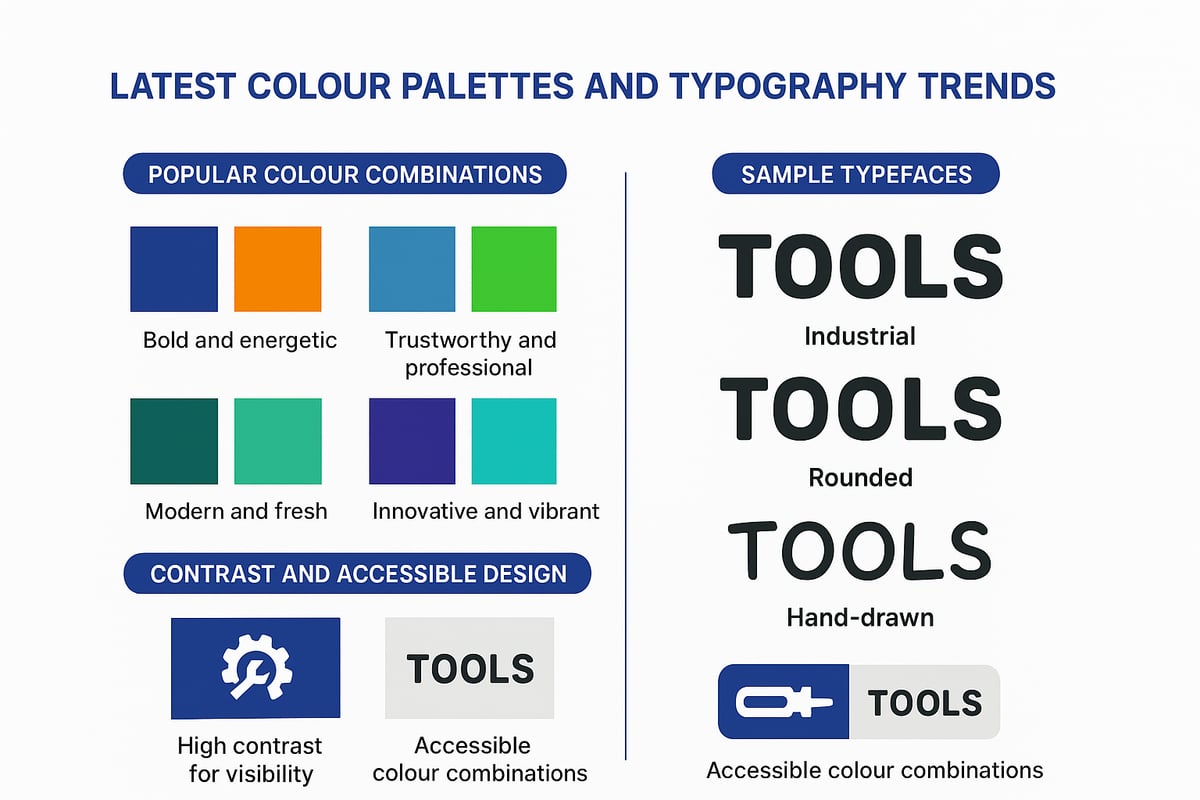
In 2026, tools logo design is embracing vibrant and earthy colour palettes. Brands are combining electric blue with charcoal, or lime green with slate grey, to create visual energy while maintaining a grounded feel. These bold hues make a tools logo pop on digital screens and printed materials alike.
Data from popular design platforms shows that palettes featuring both energetic and muted tones are topping the charts for tools logo downloads. This trend reflects a desire for logos that are both attention-grabbing and trustworthy. Colour psychology plays a key role, as blue communicates reliability and green signals sustainability—two values crucial for the tools sector.
When selecting a palette, consider how colours affect perception. A tools logo with a fresh, contemporary palette can set a brand apart and signal innovation in a crowded market.
Typography Choices: From Industrial to Friendly
Typography is a defining element for any tools logo. In 2026, brands are gravitating towards custom typefaces that balance industrial strength with approachability. Strong sans-serif fonts communicate durability, while rounded or hand-drawn styles add a personal touch.
The use of bespoke typography has surged, with many companies opting for letterforms that echo the shapes of tools themselves. For example, a sturdy, geometric font can evoke the precision of a wrench or hammer, whereas a softer font suggests accessibility and customer care. According to Typography trends in 2026, expressive and character-rich fonts are dominating new logo designs.
Choosing the right typeface ensures a tools logo is not just legible but also memorable, reinforcing brand values across all touchpoints.
The Power of Contrast and Negative Space
Contrast and negative space are powerful techniques for elevating a tools logo. By pairing bold colours with ample whitespace, designers create logos that are visually striking and easy to read. Negative space can cleverly form hidden shapes, like a spanner or screwdriver within a letter, adding an element of surprise and sophistication.
Engagement metrics reveal that tools logo designs using contrast and negative space see higher recognition and recall rates. The interplay between light and dark, or filled and empty, makes these logos memorable without overwhelming the viewer.
When designing a tools logo, experiment with contrast and subtle details. This approach ensures the logo stands out in both large and small formats, from billboards to app icons.
Accessibility and Readability in Logo Design
Accessibility is now a non-negotiable aspect of tools logo design. Brands are prioritising high-contrast colour pairings and clear, legible fonts to ensure their logos are visible to all, including users with visual impairments. This commitment to inclusivity not only broadens a brand's reach but also builds trust with diverse audiences.
Demand for accessible design standards is on the rise, especially as tools logo assets are used across multiple platforms and backgrounds. Testing logos for clarity in different contexts is essential for maintaining consistency and impact.
By focusing on accessibility, brands future-proof their tools logo, ensuring it communicates effectively with every potential customer.
Practical Tips for Creating a Standout Tools Logo
Crafting a standout tools logo requires a blend of strategic thinking, creativity, and technical know-how. Whether you are launching a new business or refreshing your brand, the following practical tips will help you navigate the design process with confidence and clarity.

Researching Your Target Audience and Market
Before you begin designing your tools logo, take time to understand your target audience and the competitive landscape. Analyse what appeals to your customers by reviewing successful logos in your sector.
Gather consumer feedback through surveys or focus groups to pinpoint design elements that resonate. Study competitor logos to identify gaps and opportunities for differentiation. Brands that align their tools logo with audience preferences often see higher engagement and brand recall.
Effective market research is the foundation for a logo that feels relevant and compelling. Tailoring your design to your audience’s values and expectations will set your tools logo apart in a crowded marketplace.
Choosing the Right Design Tools and Resources
Selecting the right resources is crucial for an effective tools logo. Explore leading platforms like Freepik, Vecteezy, or Adobe Illustrator, which offer a range of templates and customisation options. Decide whether to use a ready-made template or invest in a bespoke design.
AI-powered logo generators are increasingly popular, enabling rapid prototyping and experimentation. Consider the pros and cons of DIY design versus hiring a professional. For insight into how your tools logo shapes your overall brand, review these brand identity and logo tips.
Invest in quality design tools to ensure your logo is versatile, scalable, and future-proof.
Testing and Refining Your Logo Design
Once you have a draft of your tools logo, gather feedback from real users. Use focus groups, online surveys, or A/B testing to see how your logo performs in various contexts.
Iterative refinement is key—be willing to revise your design based on constructive input. Test your tools logo across digital and print platforms to ensure clarity and impact.
Brands that test their logos before launch often report higher satisfaction and stronger brand recognition. Treat the design process as ongoing, refining your tools logo to keep it aligned with evolving trends and audience preferences.
Ensuring Consistency Across All Brand Touchpoints
After finalising your tools logo, apply it consistently across all marketing channels. Develop clear usage guidelines for digital platforms, print materials, uniforms, and merchandise.
A well-documented brand style guide ensures your logo remains recognisable and maintains visual coherence. Consistent application of your tools logo can increase brand recognition by up to 80 percent, according to industry research.
Building trust with your audience starts with a cohesive look and feel. Prioritise consistency to strengthen your brand identity and make your tools logo truly memorable.
As you’ve seen, the world of tools logos is rapidly evolving—whether it’s the clean lines of minimalism, eco-friendly motifs, or bold new uses of colour and animation, there’s a powerful opportunity to make your brand stand out in 2026. If you’re ready to put these trends into action and give your business a fresh, distinctive look, I’m here to help. Let’s combine strategic thinking with creative flair to build a logo that truly reflects your values and vision.
Start your project